
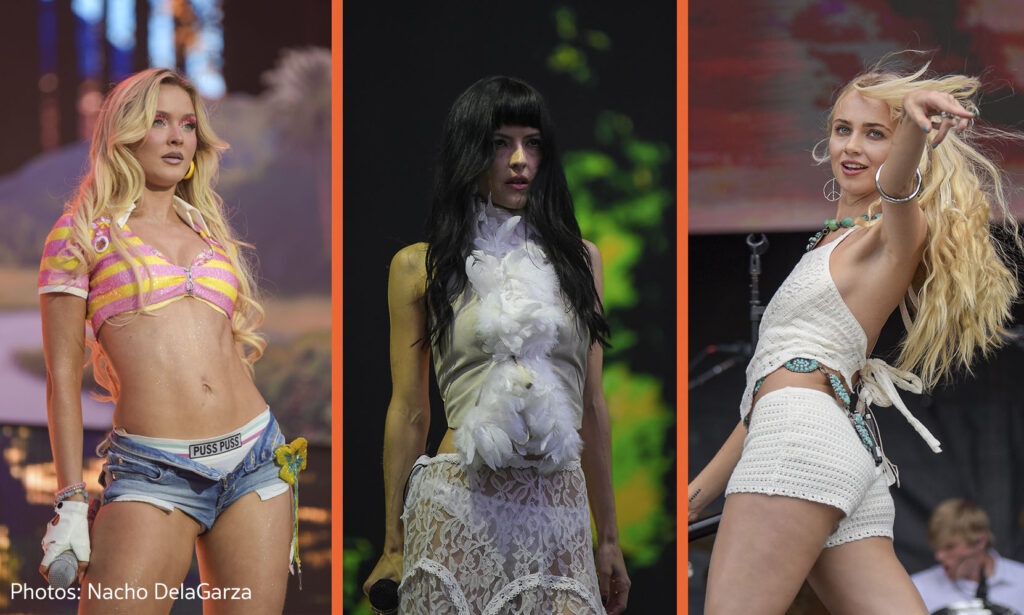
The festival kept its momentum going on Day Two!
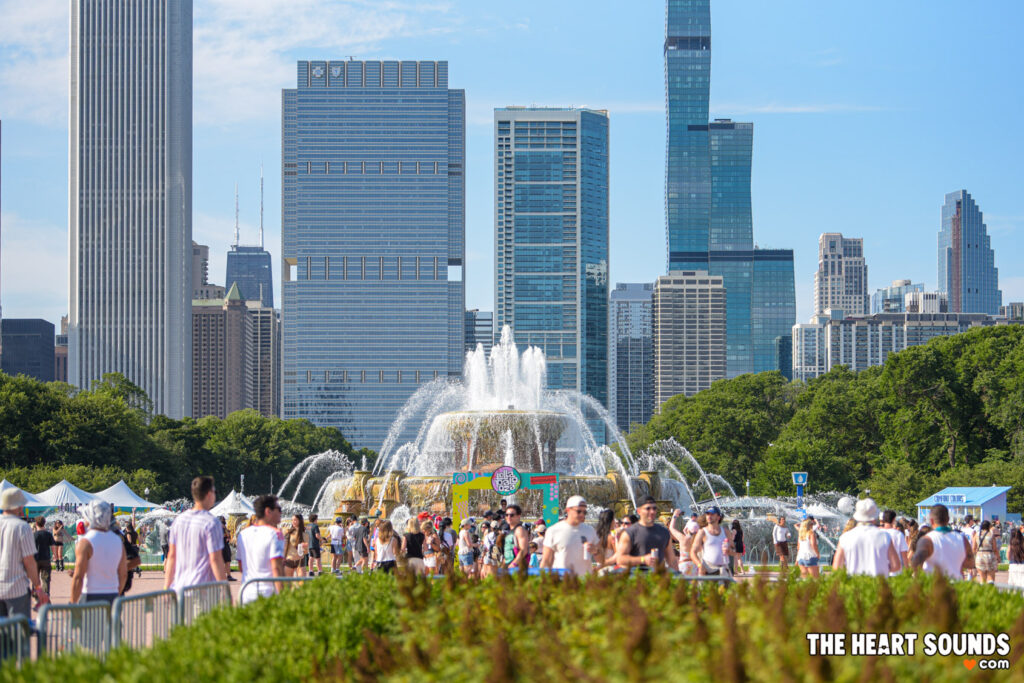
By the time Day Two of Lollapalooza 2026 got underway, Grant Park already felt like its own little city. Festival shirts from the day before mixed with carefully planned outfits, disposable cameras hung from shoulders, and long lines formed at the merch tents before many of the first artists even walked onstage. The weather cooperated once again for part of the day. The rain was coming in and out, providing occasional relief from the summer sun while a light breeze drifted through different parts of the park. It made walking from stage to stage much more comfortable, even with thousands of people constantly on the move.
One of the best parts about arriving early is watching the festival slowly come to life. Some fans spread blankets across the grass while others rushed straight to the barricades, determined to secure the best possible view. Every stage attracted a different crowd, making each walk across the grounds feel like stepping into another world. You could hear pop melodies from one direction, booming bass from another, and excited conversations about which artists people planned to see later that evening.
Day Two felt a little more relaxed than opening day. Everyone already knew the layout, security lines moved faster, and people seemed ready to enjoy every minute. It created the perfect atmosphere for a lineup that jumped effortlessly between indie pop, K-pop, electronic music, rock, and everything in between.
CLAIRE ROSINKRANZ
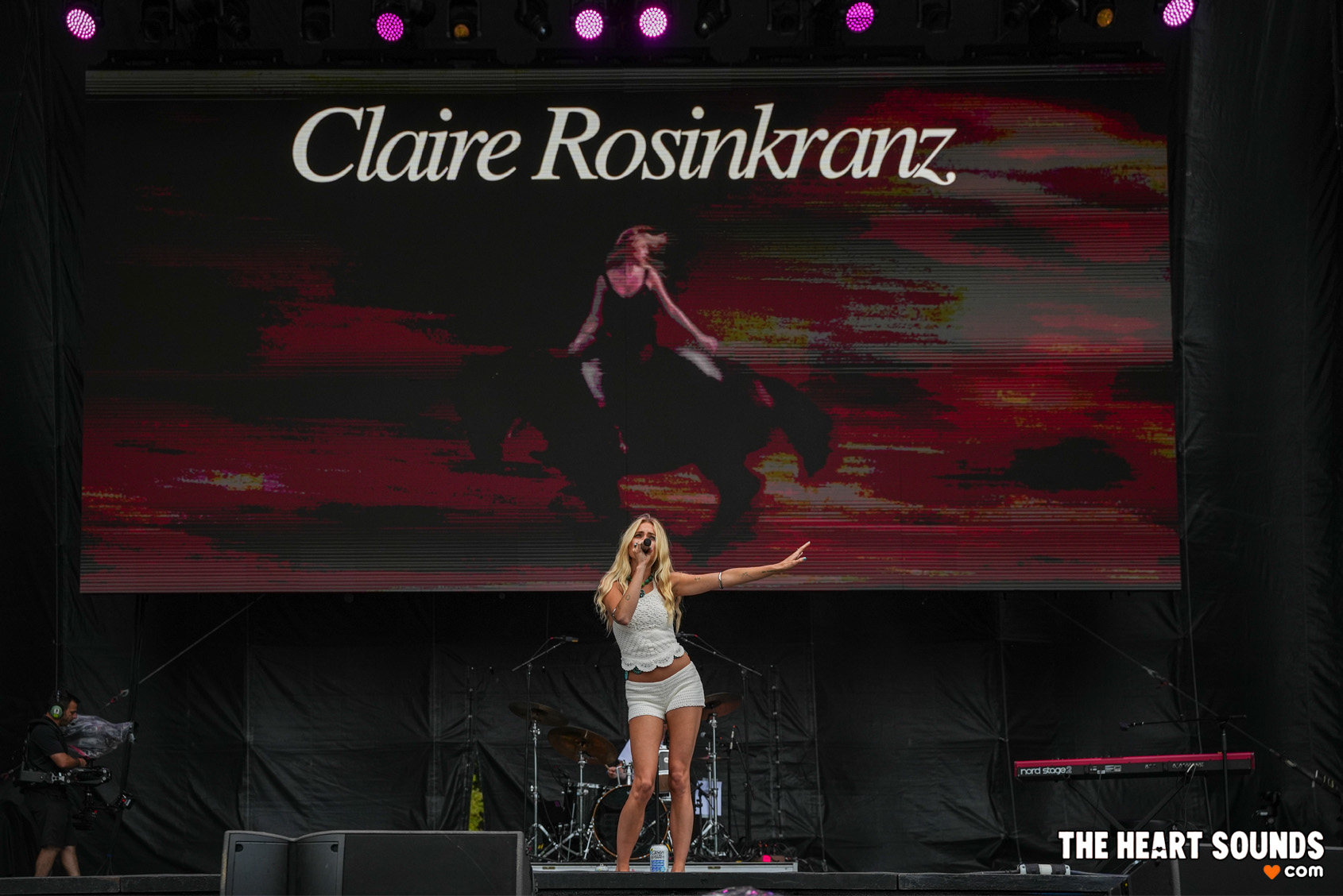
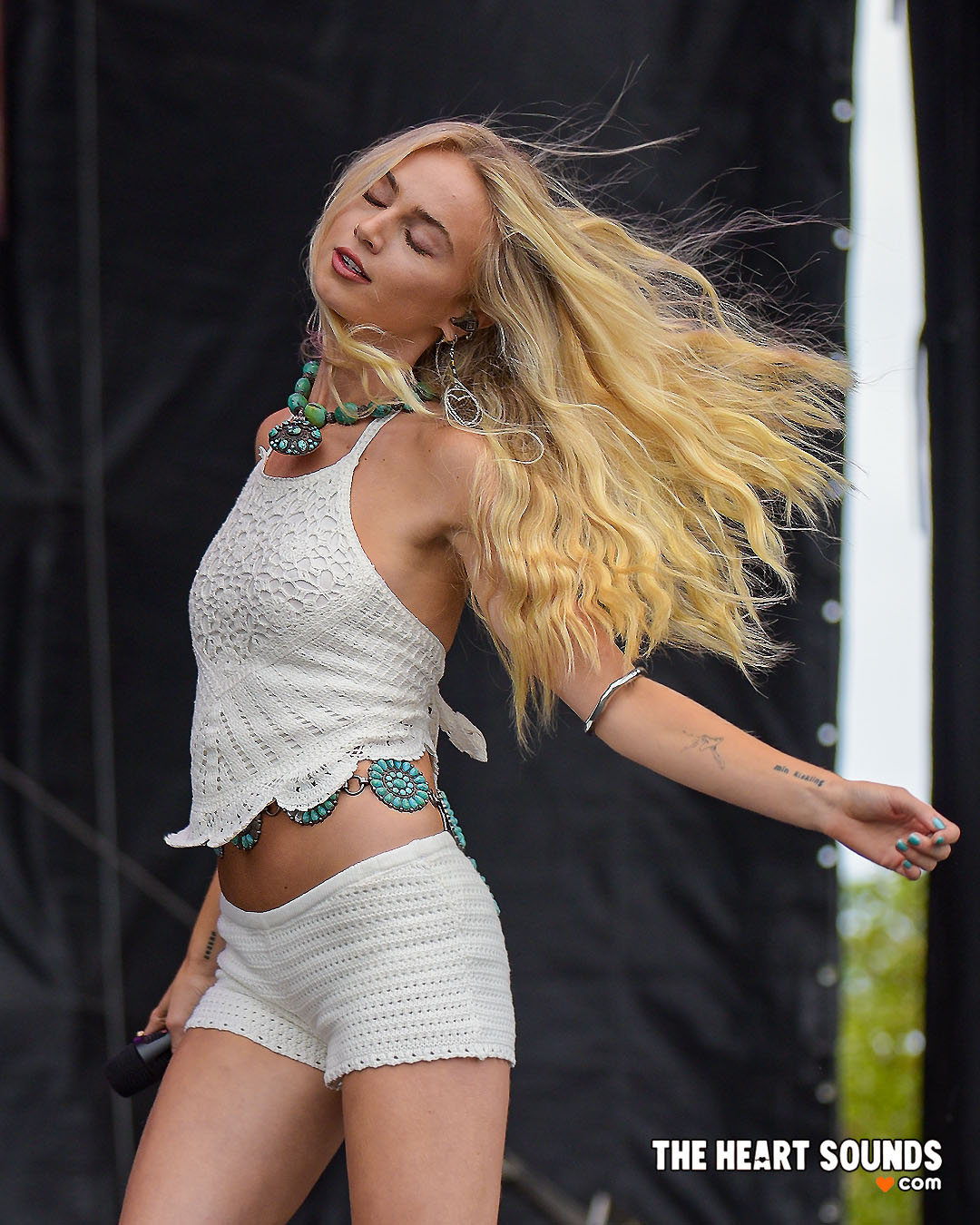
There couldn’t have been a better way to begin our second day than with Claire Rosinkranz at the Allianz Stage. Her music has always carried an easygoing personality, and that translated naturally into her live performance. Before she even reached the microphone, fans near the barricade were cheering, setting a relaxed tone that matched the early afternoon atmosphere.
Claire spent much of the show moving comfortably around the stage, smiling at the audience and interacting with fans between songs. Nothing about the performance felt forced. Instead, it felt like watching someone genuinely excited to be playing music with people who knew every lyric. That casual confidence made songs like “Kiss,” “Jayden,” “Lucy,” “Crazy Bitch Song,” and “Dancer” feel even more personal.
The loudest reaction easily came when the opening notes of “Backyard Boy” filled the park. Even people standing farther back joined the chorus, turning one of her biggest songs into a shared moment that spread well beyond the front rows. Phones immediately went into the air, but just as many people chose to dance and sing instead of recording every second.
Her band kept everything sounding clean without overpowering her vocals, allowing each song to breathe naturally. Rather than relying on flashy visuals or oversized production, Claire let her songwriting and personality do most of the work. That simplicity fit perfectly during the first hours of the festival.
As opening sets go, this one accomplished exactly what it needed to. It welcomed people into another long day of music while leaving the crowd smiling as they headed toward their next stage.
JULIA WOLF
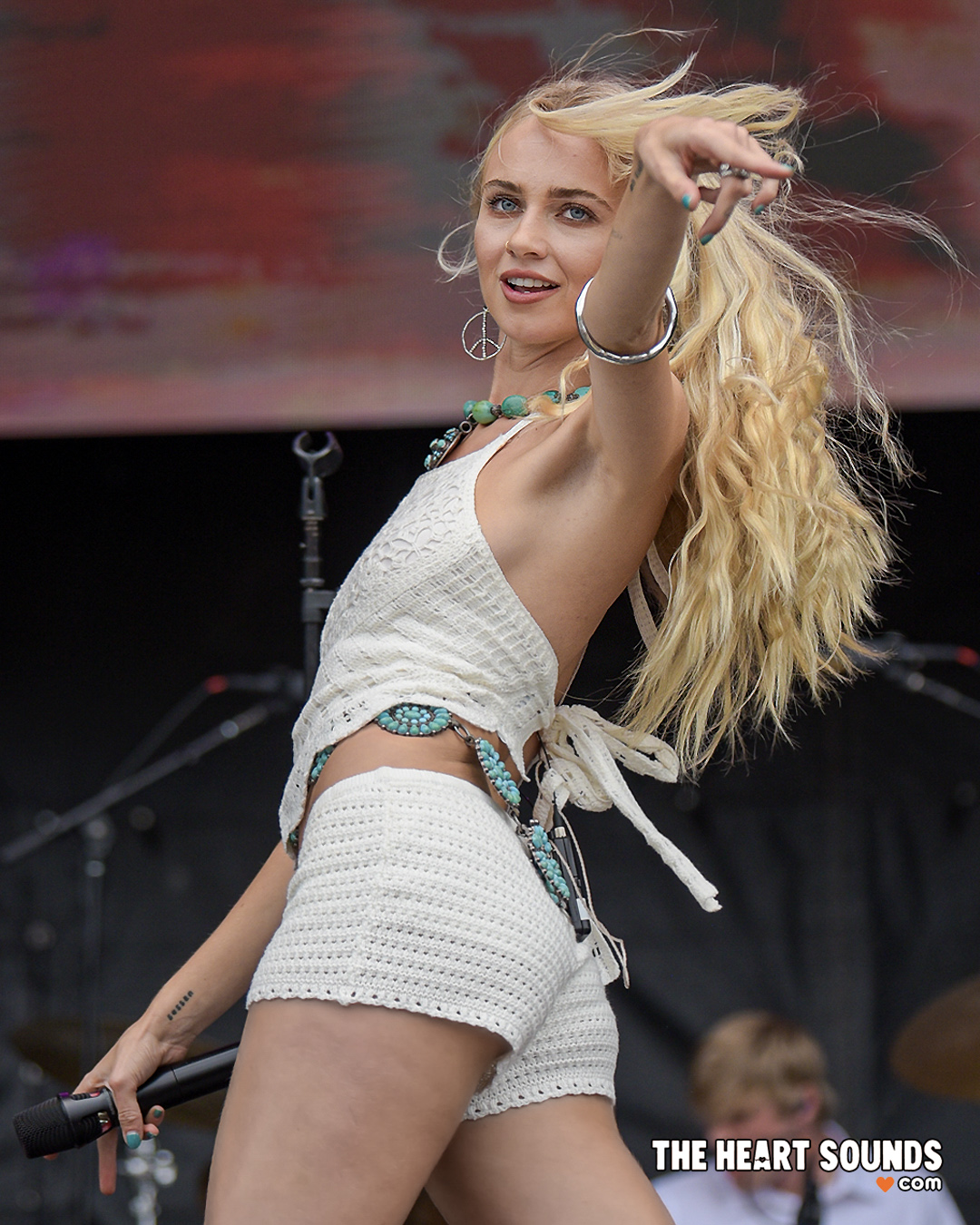
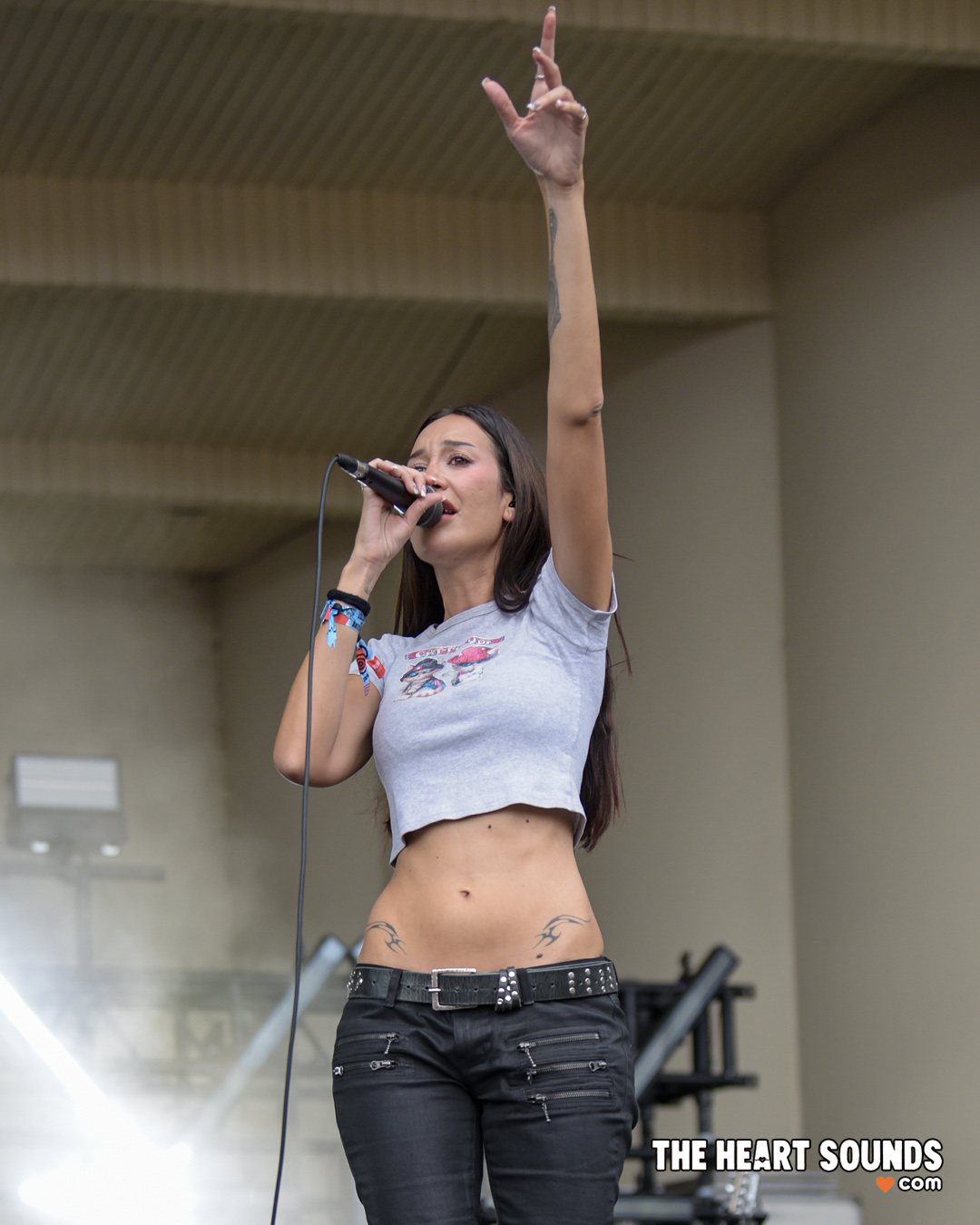
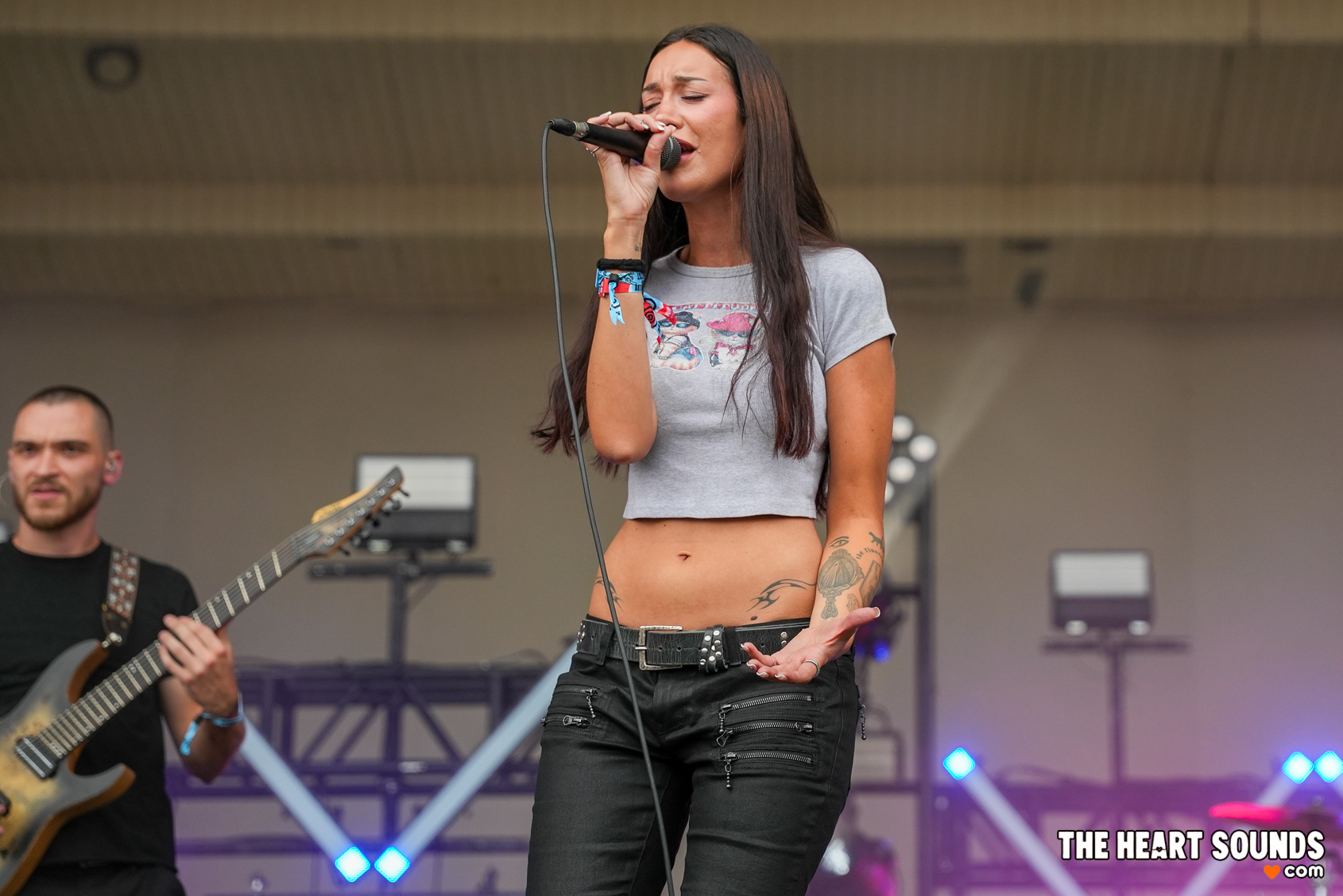
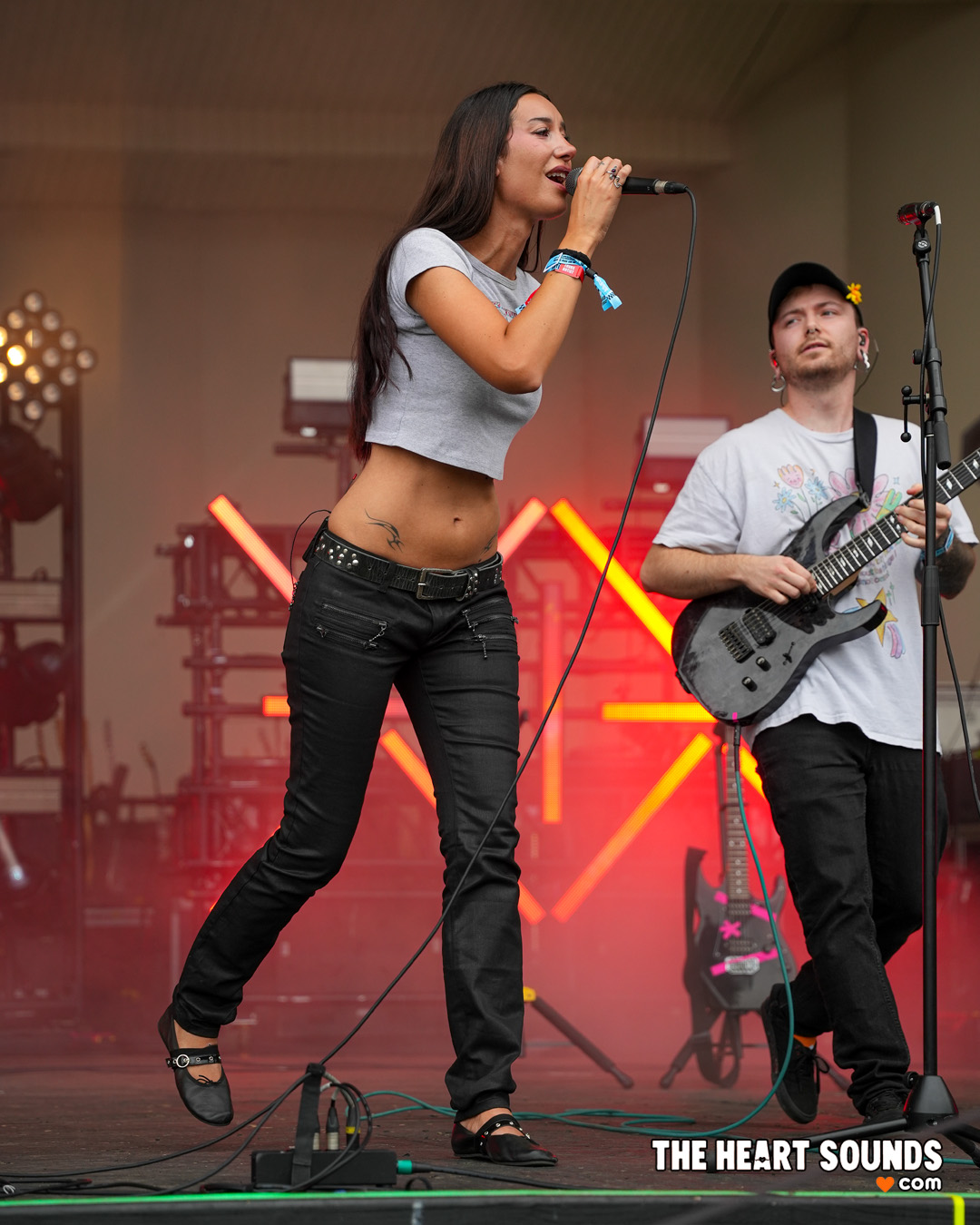
We made it to the Tito’s Stage just as Julia Wolf was getting started, and within minutes it was obvious why so many people had gathered early. Her performance felt honest from the very beginning. There was no unnecessary spectacle, just a songwriter completely immersed in her music and determined to connect with every corner of the audience. She constantly crossed the stage, making eye contact with fans, waving, smiling, and making the large crowd feel surprisingly close.
Her voice carried the emotion behind every lyric, especially during “Kill You Off” and “Burning House,” where the audience sang along with just as much feeling as she did. “Loser” and “Life Is A Storm” balanced vulnerability with a heavier alternative rock edge, giving the set a natural rise and fall instead of staying in one emotional lane. Between songs, Julia’s warm personality came through effortlessly. She looked genuinely happy to be there, often laughing with the crowd and thanking fans for spending part of their afternoon with her.
By the time “Sunshine State” and “In My Room” arrived, the audience had completely settled into her world. Phones were raised, people wrapped their arms around friends, and others simply stood quietly taking everything in. Festivals are often filled with artists trying to grab your attention as quickly as possible. Julia Wolf did the opposite. She earned it through sincerity, strong songwriting, and a performance that felt personal even in front of a festival crowd.
I-DLE
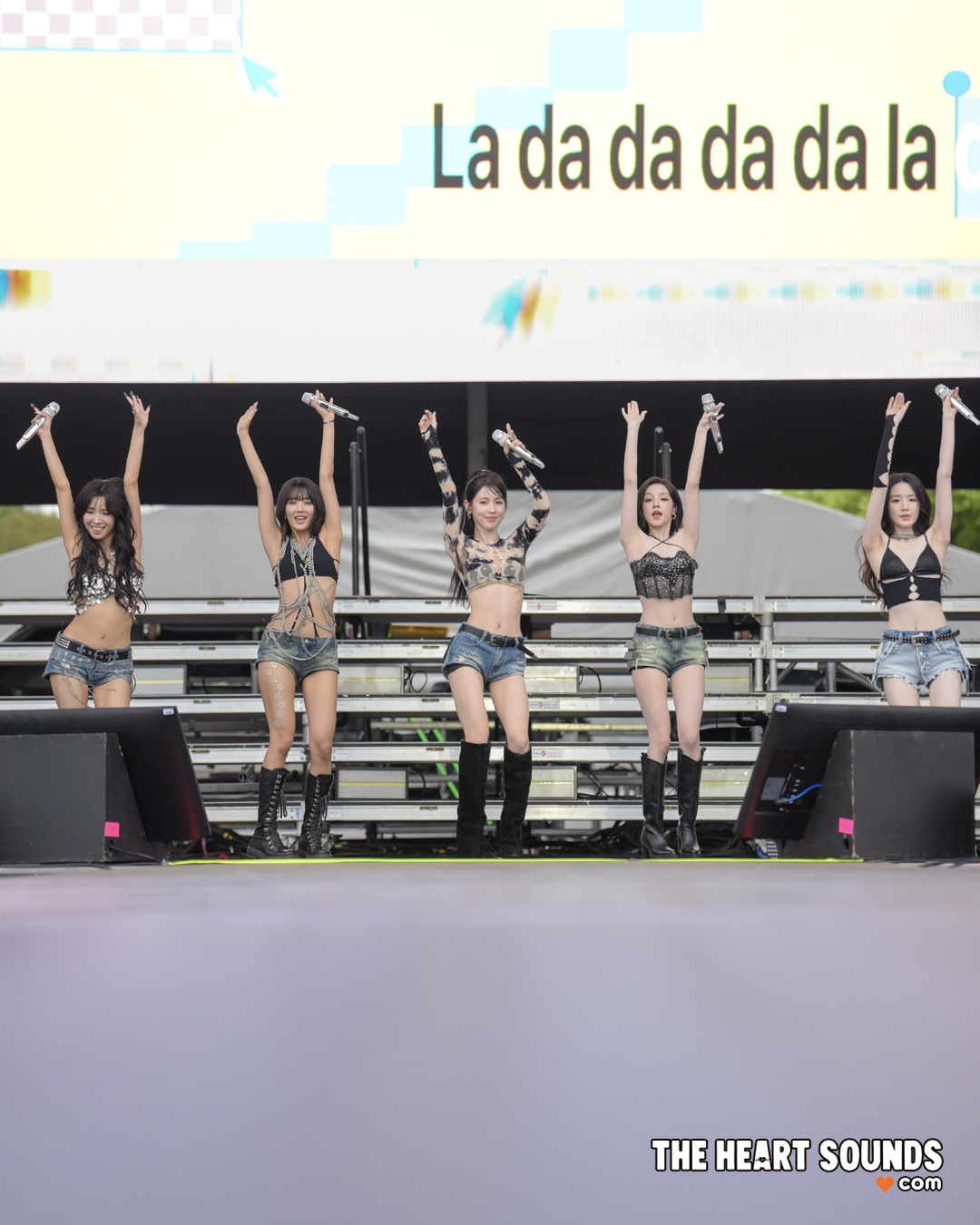
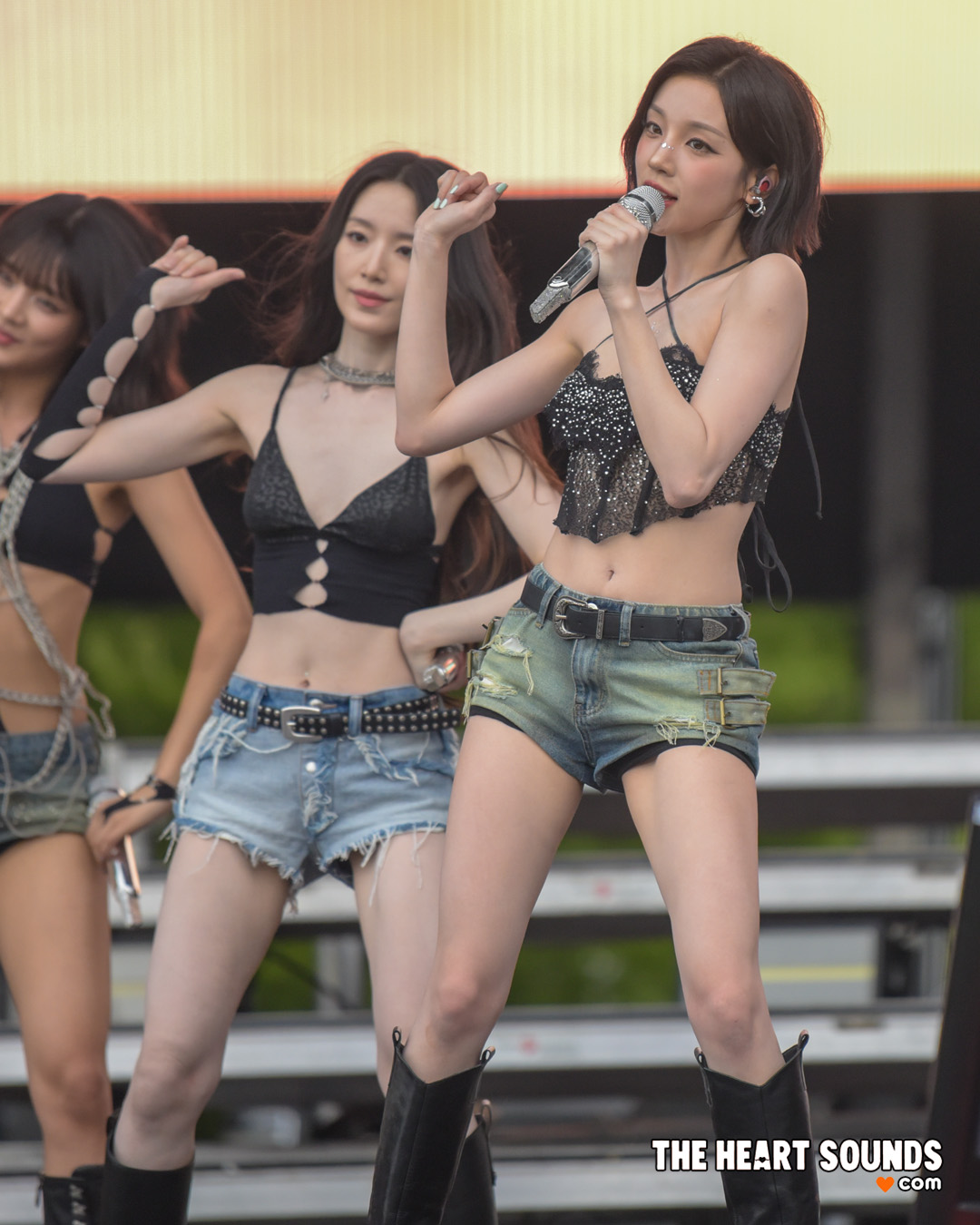
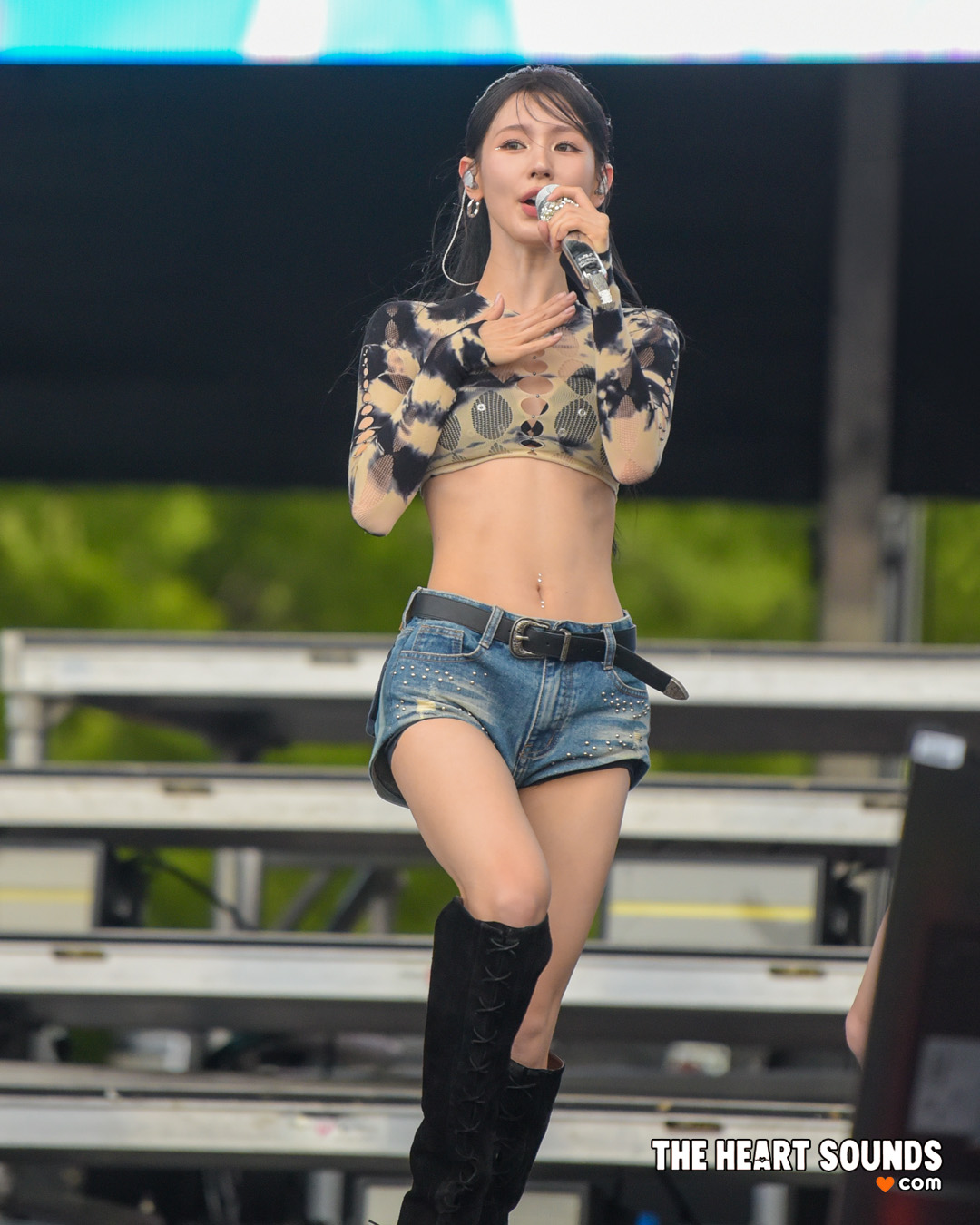
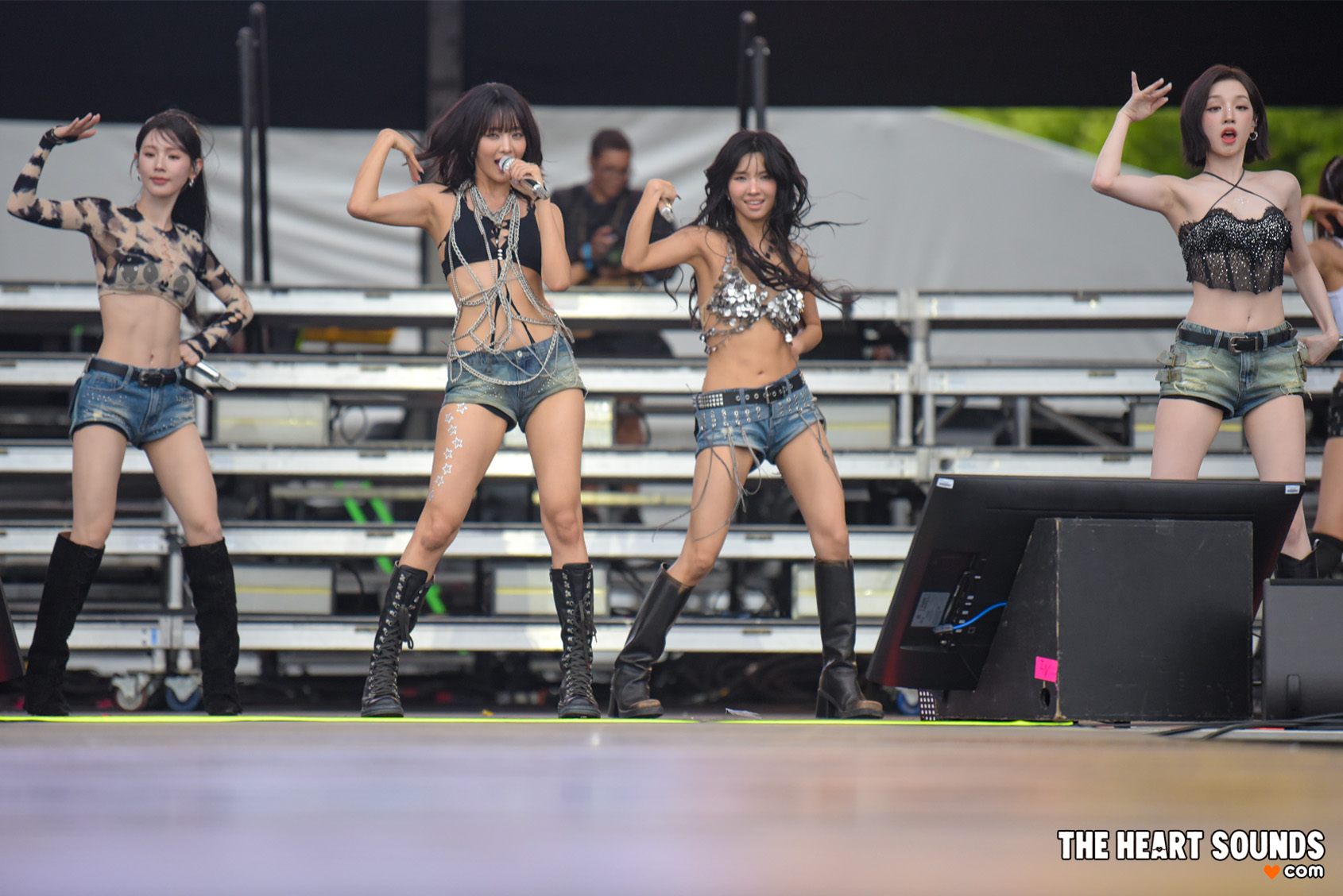
Walking from Julia Wolf to the T-Mobile Stage felt like entering an entirely different festival. Thousands of K-Pop fans had already gathered for South Korean girl group I-DLE, many carrying signs, light sticks, and homemade banners supporting Miyeon, Minnie, Soyeon, Yuqi, and Shuhua. The excitement had been building long before the group appeared, and the roar that greeted them immediately confirmed how eagerly this performance had been anticipated.
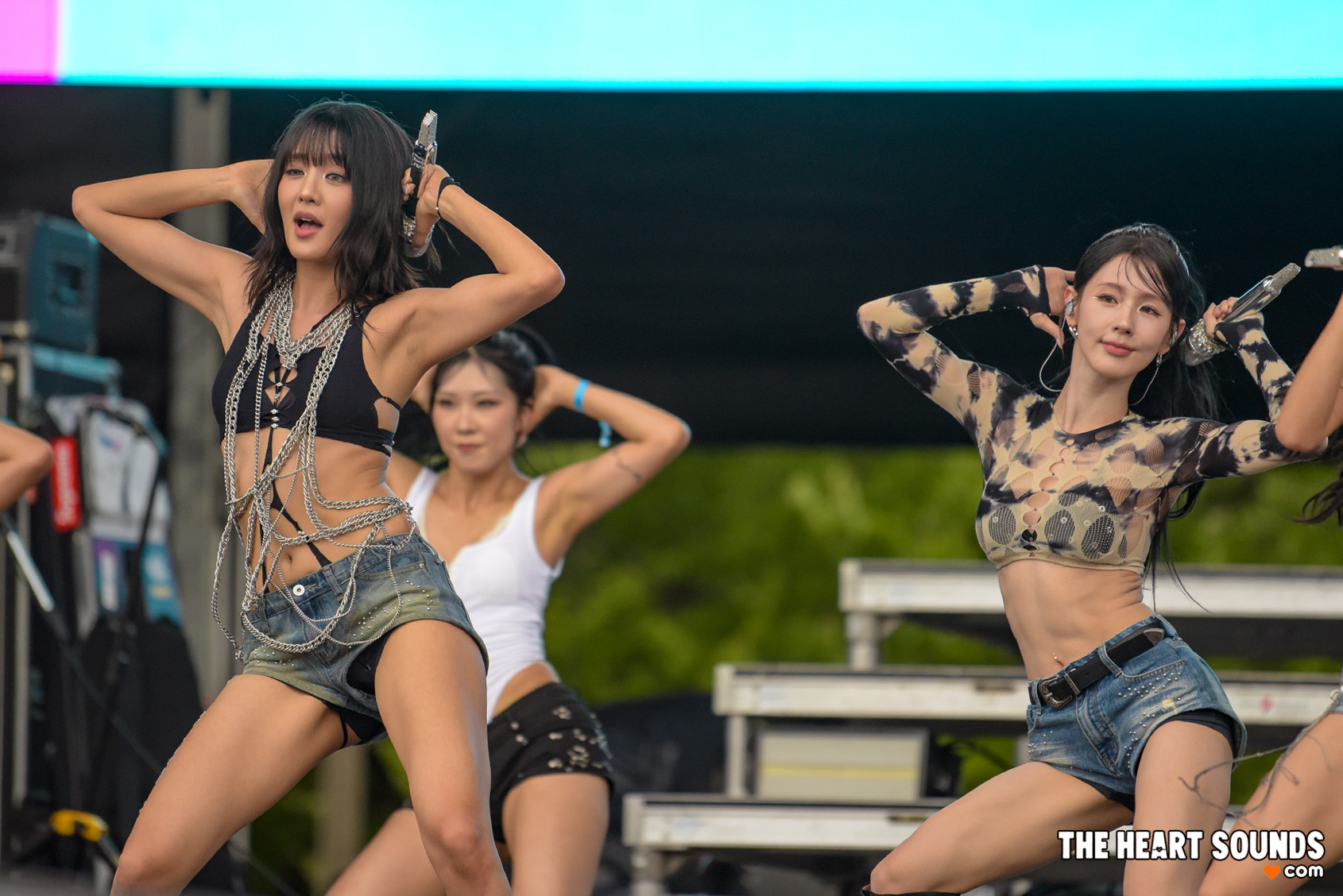
From the very first song, the group’s chemistry stood out. Every member had opportunities to shine, whether through vocal performances, choreography, or speaking directly to the audience. Their synchronized dancing remained impressively sharp throughout the set, yet nothing looked overly mechanical. They smiled often, waved constantly, and made fans feel included throughout the performance.
Songs like “Super Lady,” “Revenge,” “Villain Dies,” “Lion,” “Gimme Dat Love,” “Good Thing,” and “Queencard” kept the crowd fully engaged. Every chorus triggered another loud singalong, while the members encouraged fans to clap, wave, and sing with them. Even people who weren’t longtime followers found themselves joining the excitement simply because of how welcoming the performance felt.
The production added another layer without distracting from the group itself. Bright visuals, lighting changes, and coordinated staging complemented each song while keeping the focus on the performers. Between songs, the members took time to thank the audience, joke with each other, and express how happy they were to be at Lollapalooza.
What made the performance memorable wasn’t just the choreography or polished vocals. It was how naturally I-DLE connected with thousands of people at once. Their personalities came across just as clearly as their music, creating a set that balanced precision, fun, and genuine interaction from beginning to end.
RØZ
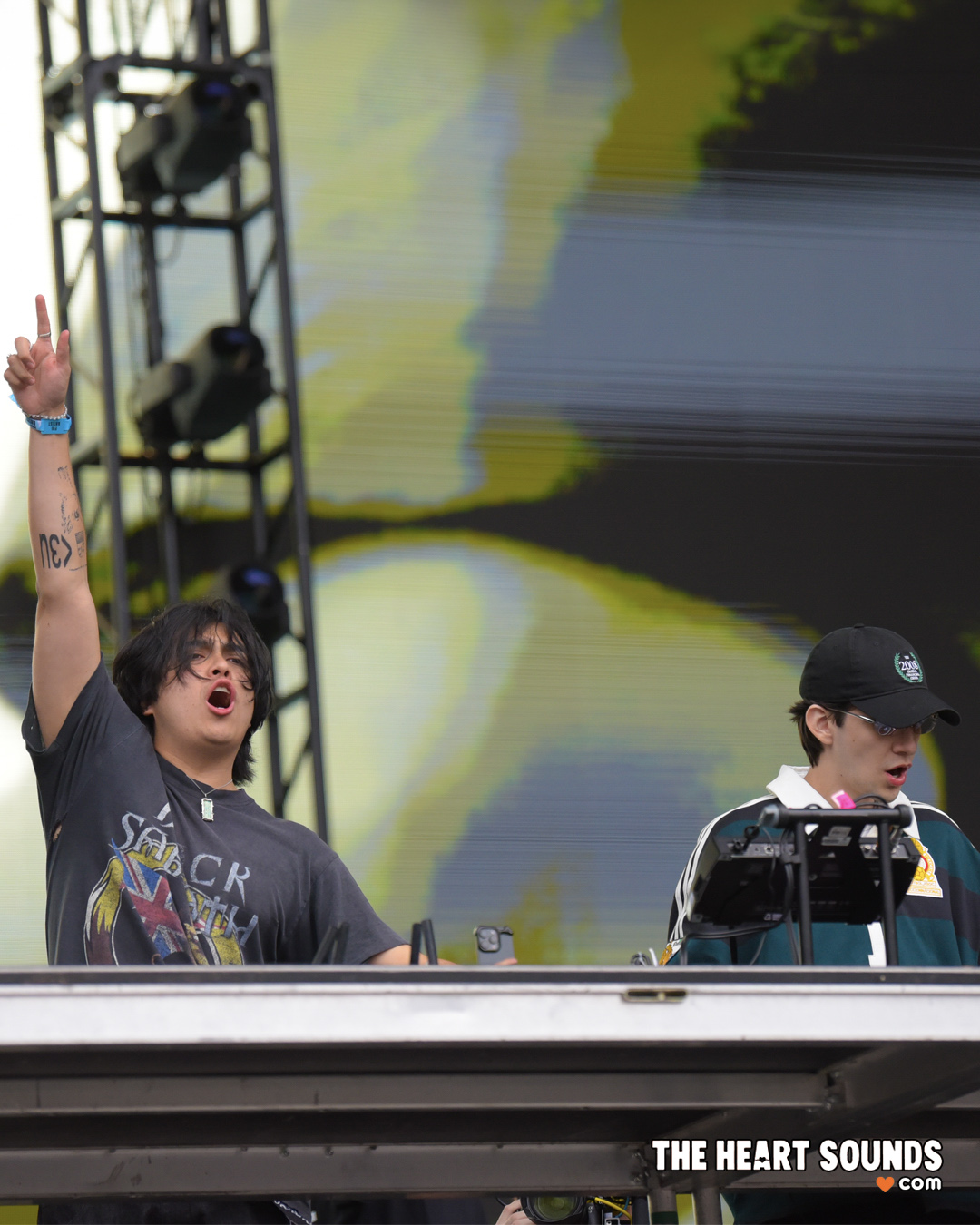
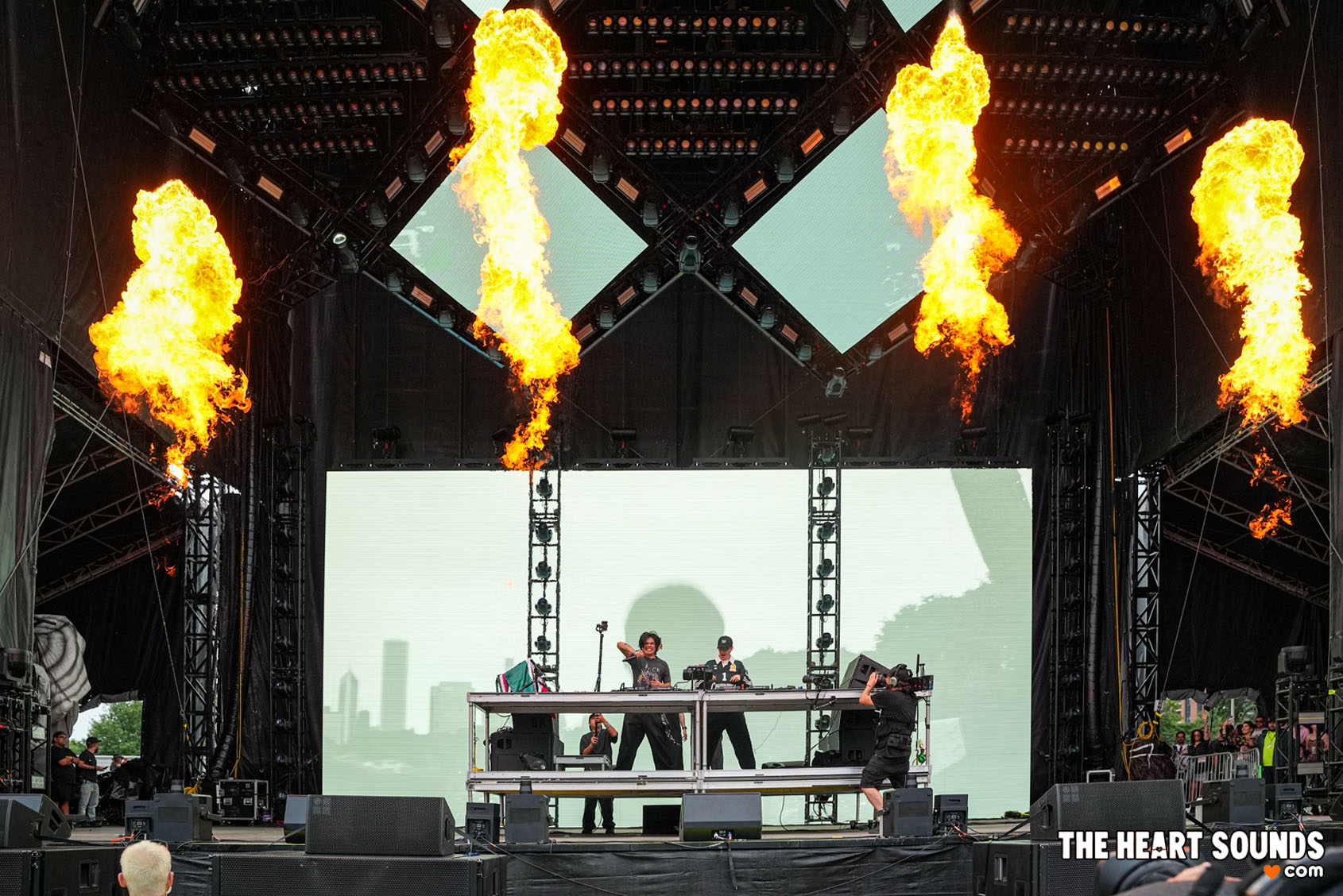
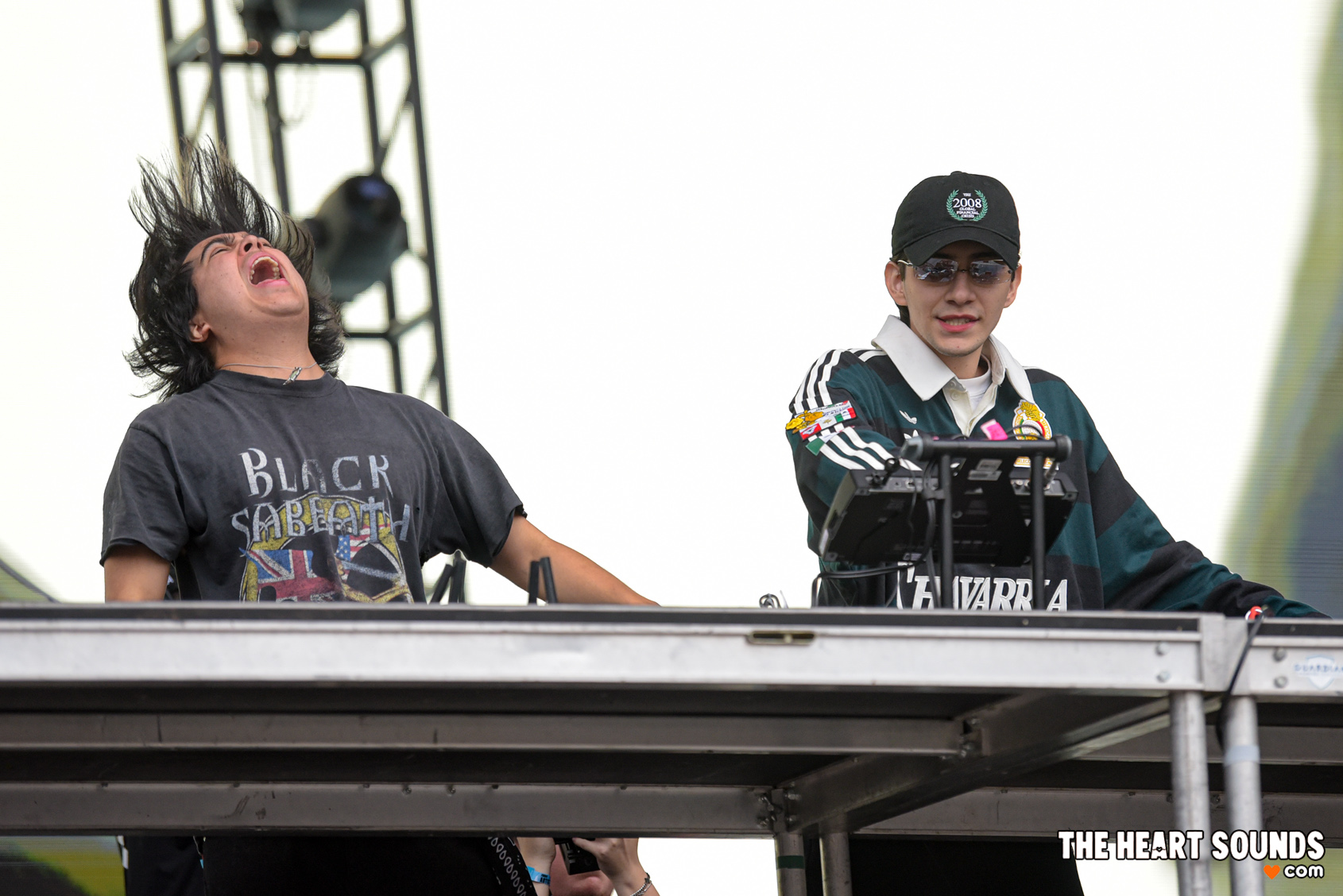
Moving from the polished choreography of I-DLE to the bass-heavy atmosphere of Perry’s Stage was one of those classic Lollapalooza moments where the festival completely changes personalities in just a few minutes. Waiting for us was RØZ, the Mexican DJ and producer duo of Manolo Cabrera and Hugo Lara, who have become one of the most exciting names in Latin electronic music. Before they even walked onstage, the crowd had already packed the area, knowing exactly what kind of party was about to begin.
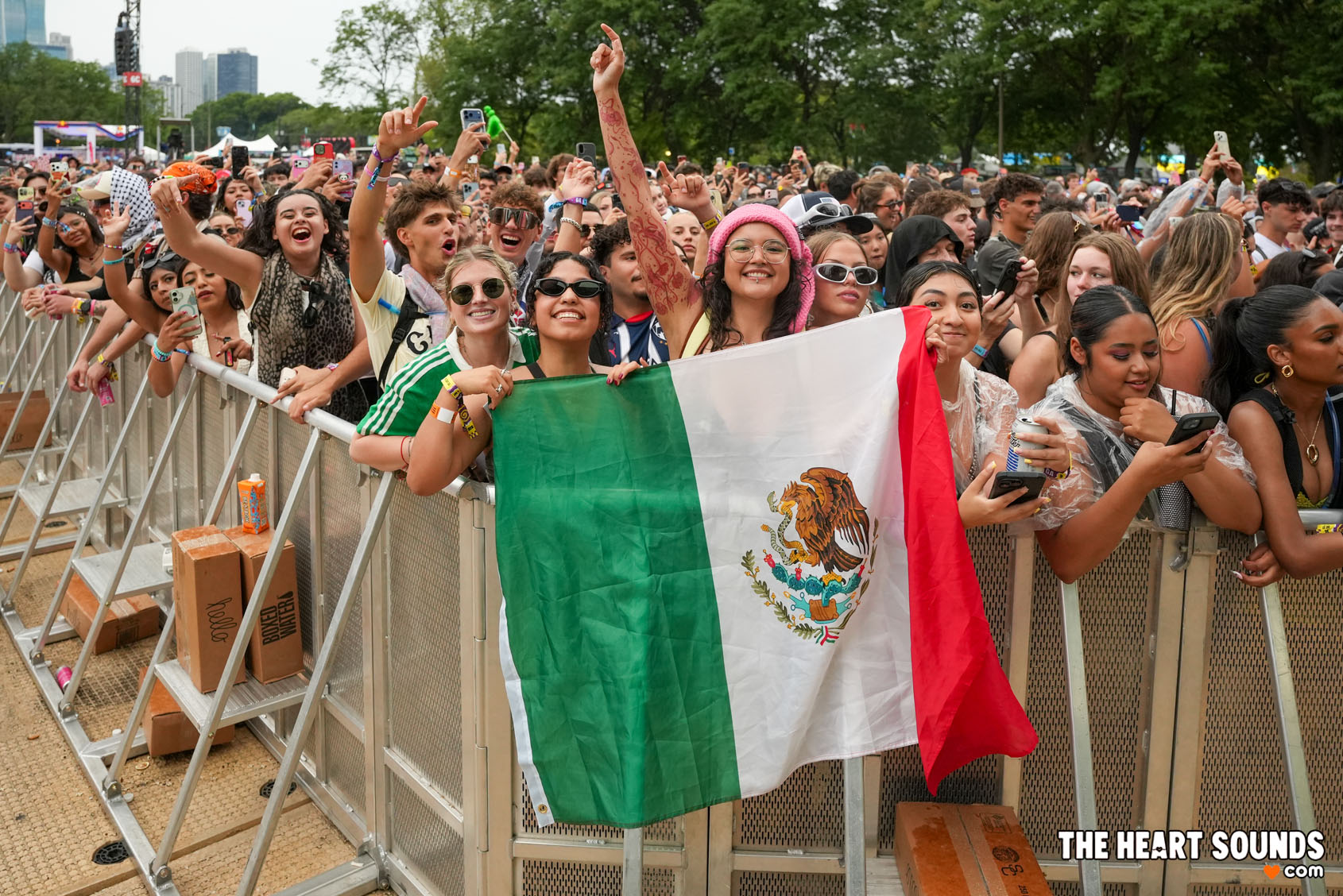
From the opening drop, Perry’s transformed into one giant dance floor. Their mix of Latin trap, house, and drum & bass kept the momentum high without feeling repetitive. Every transition flowed naturally into the next, and each beat seemed to pull even more people into the middle of the crowd. Groups of friends danced shoulder to shoulder while others formed circles that kept growing as more festivalgoers joined in.
One of the strongest parts of the set was its pacing. Rather than relying on nonstop heavy drops, RØZ mixed energetic moments with brief buildups that kept fans anticipating what would come next. The visuals and lighting matched the music perfectly, creating an immersive atmosphere without distracting from the performance itself.
What stood out most was seeing a Latin electronic act command one of the festival’s biggest dance crowds. Fans cheered after every transition and celebrated every bass drop together. It was impossible to stand still, and by the end of the set, the audience left Perry’s smiling, sweaty, and already talking about catching RØZ again.
FINN WOLFHARD
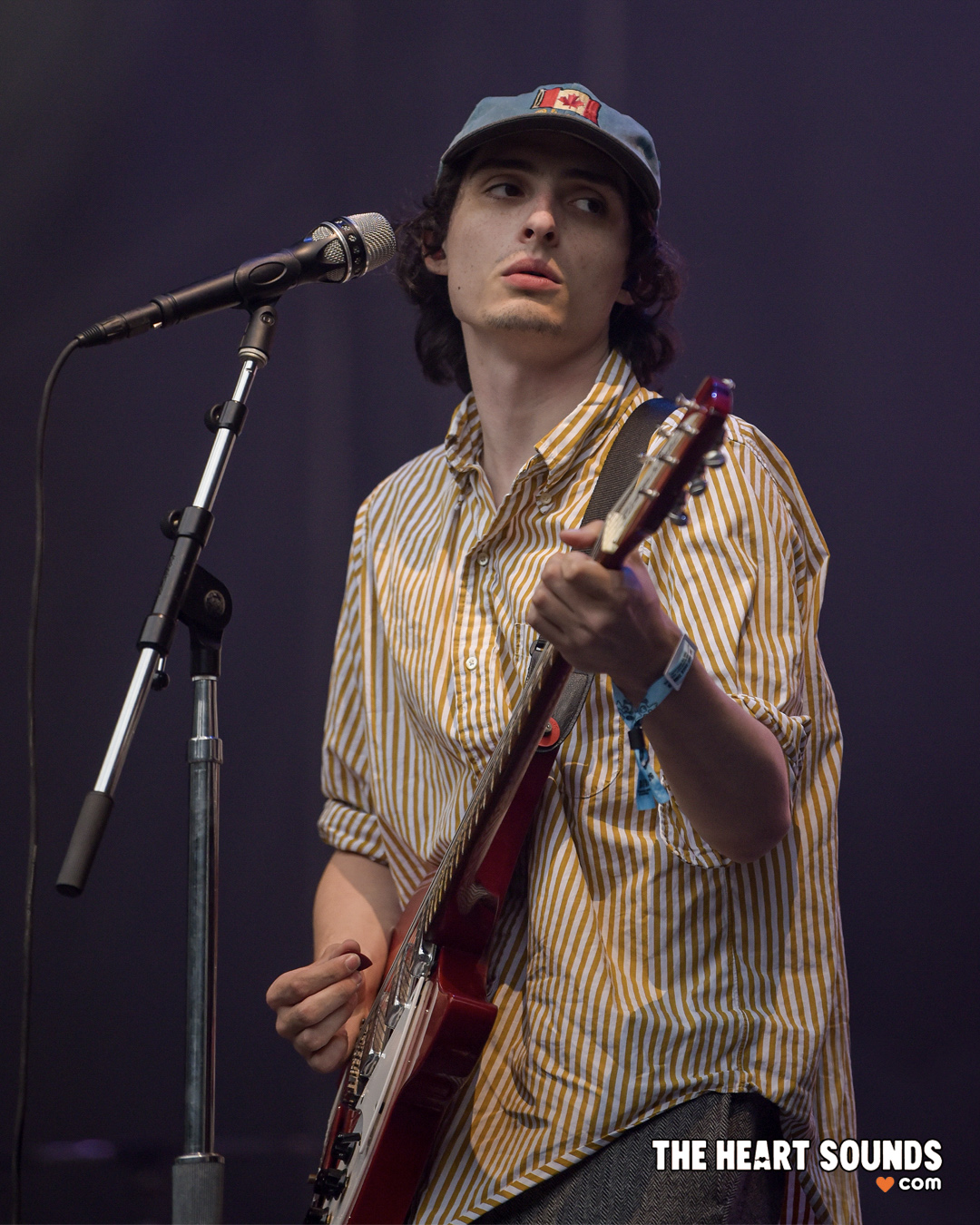
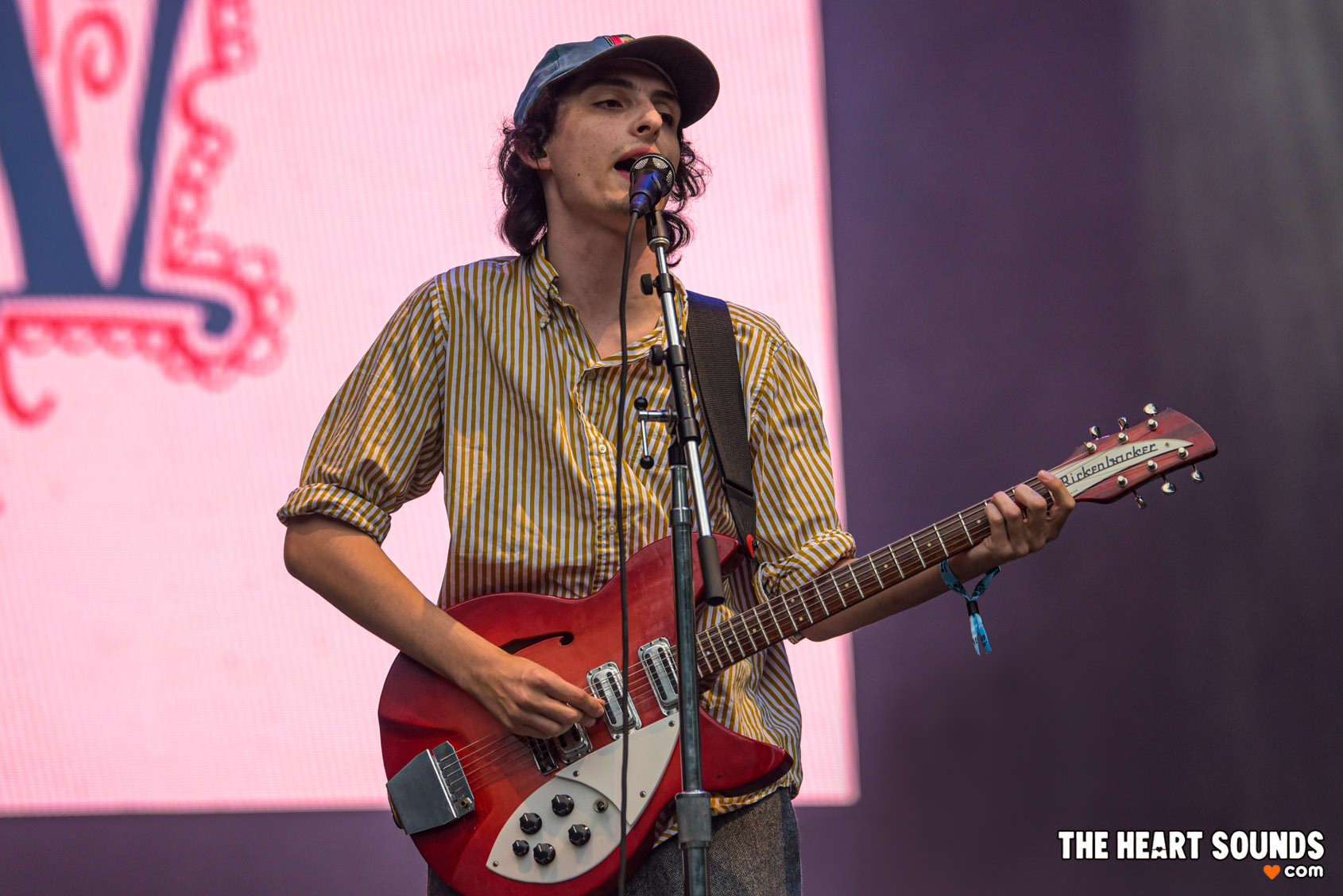
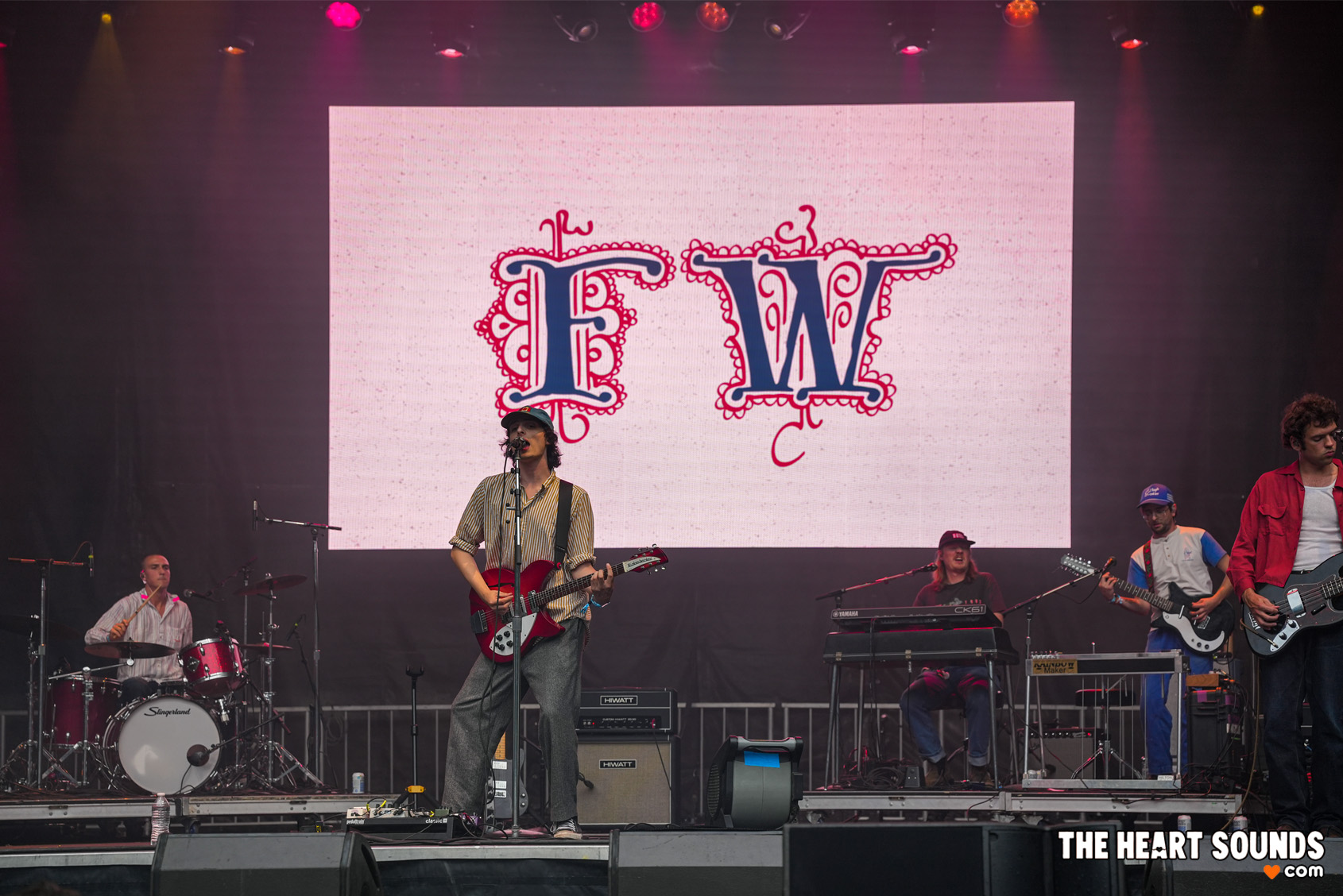
One of the performances we had circled before arriving at Lollapalooza was Finn Wolfhard. While many people first discovered him through Stranger Things, his musical career continues to develop on its own, and seeing him live offered a completely different perspective. Last year we enjoyed watching Djo perform, so it felt fitting that this year we finally experienced another actor successfully stepping onto a festival stage through music.
Finn’s set leaned into an analog indie rock sound that felt refreshingly simple. There were no oversized visual effects or elaborate production tricks. Instead, the focus stayed on the songs, the band, and the connection they built with the audience. He moved comfortably around the stage, occasionally stepping toward the front to acknowledge fans before returning to play alongside his bandmates.
Songs like “I’ll Let You Finish,” “Common Side Effects,” “Crater,” “Follow,” and, for the end, “Trailers After Dark” showcased both the quieter and more energetic sides of his songwriting. The setlist flowed naturally, allowing softer moments to breathe before picking things back up with louder guitar-driven sections. Fans responded by singing along, clapping between songs, and cheering whenever Finn paused to speak.
What impressed us most was how genuine the performance felt. Rather than trying to separate himself from his acting career, Finn simply let the music speak for itself. His confidence continues to grow as a performer, and the crowd rewarded that honesty with enthusiastic applause throughout the set. By the end, it was clear people had come not just to see a familiar face, but to support an artist steadily carving out his own place in indie rock.
BALU BRIGADA
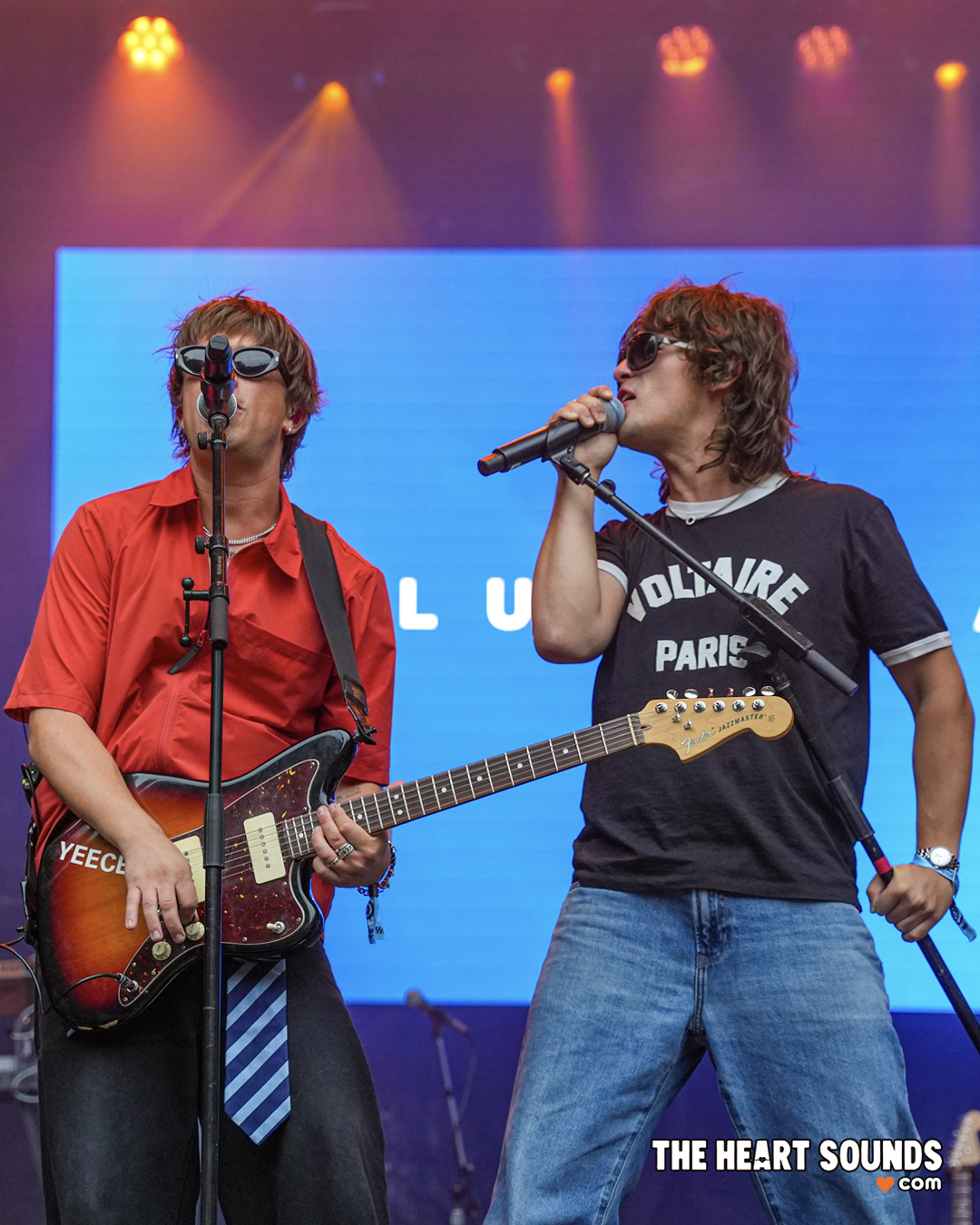
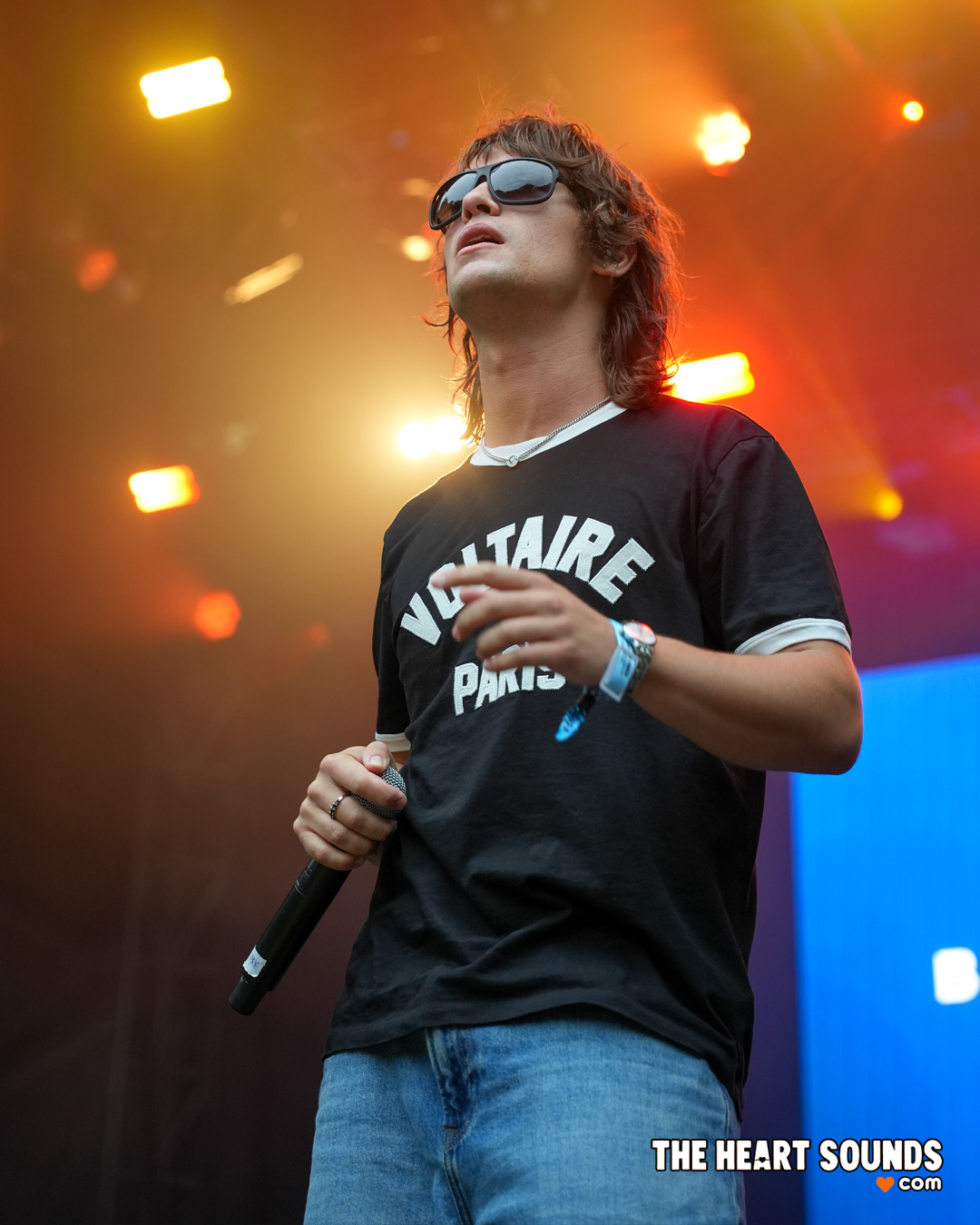
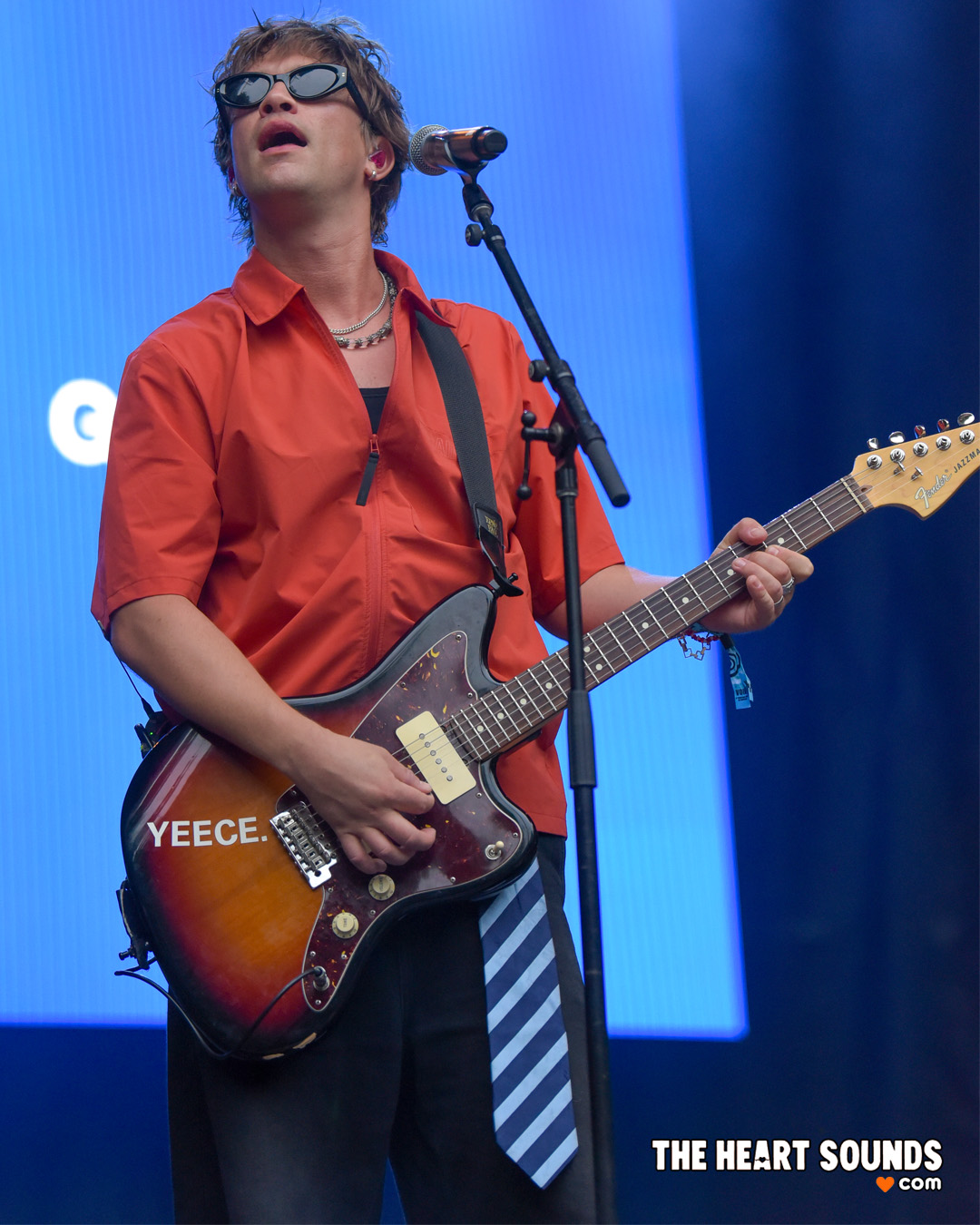
After an emotional stop with Finn Wolfhard, it was time to switch gears as Balu Brigada brought their upbeat indie rock to the festival. The New Zealand duo of brothers Henry and Pierre Beasley walked onstage with the kind of relaxed confidence that immediately made the audience feel comfortable. Before long, that relaxed atmosphere turned into one of the most energetic crowds of the afternoon.
The brothers barely stayed still. They bounced from one side of the stage to the other, constantly encouraging fans to clap, jump, and sing with them. Their chemistry was impossible to miss. Years of playing together showed in the way they anticipated each other’s moves and locked into every groove without needing to think about it. Songs like “The Portal,”“Golden Gate Girl,” and “Sideways” kept the momentum building, while “Backseat” received one of the loudest reactions of the set as hundreds of voices joined in from the opening line.
One of the most entertaining moments came when they worked Daft Punk’s “Robot Rock” into the performance, surprising the crowd and adding another burst of energy that had people dancing all the way toward the back of the field. Closing with “So Cold,” the duo left behind smiling faces everywhere you looked. Their music carries plenty of catchy hooks, but what made the performance memorable was how much fun they were clearly having. That excitement spread naturally through the audience and made their set one of Day Two’s happiest discoveries.
ZARA LARSSON
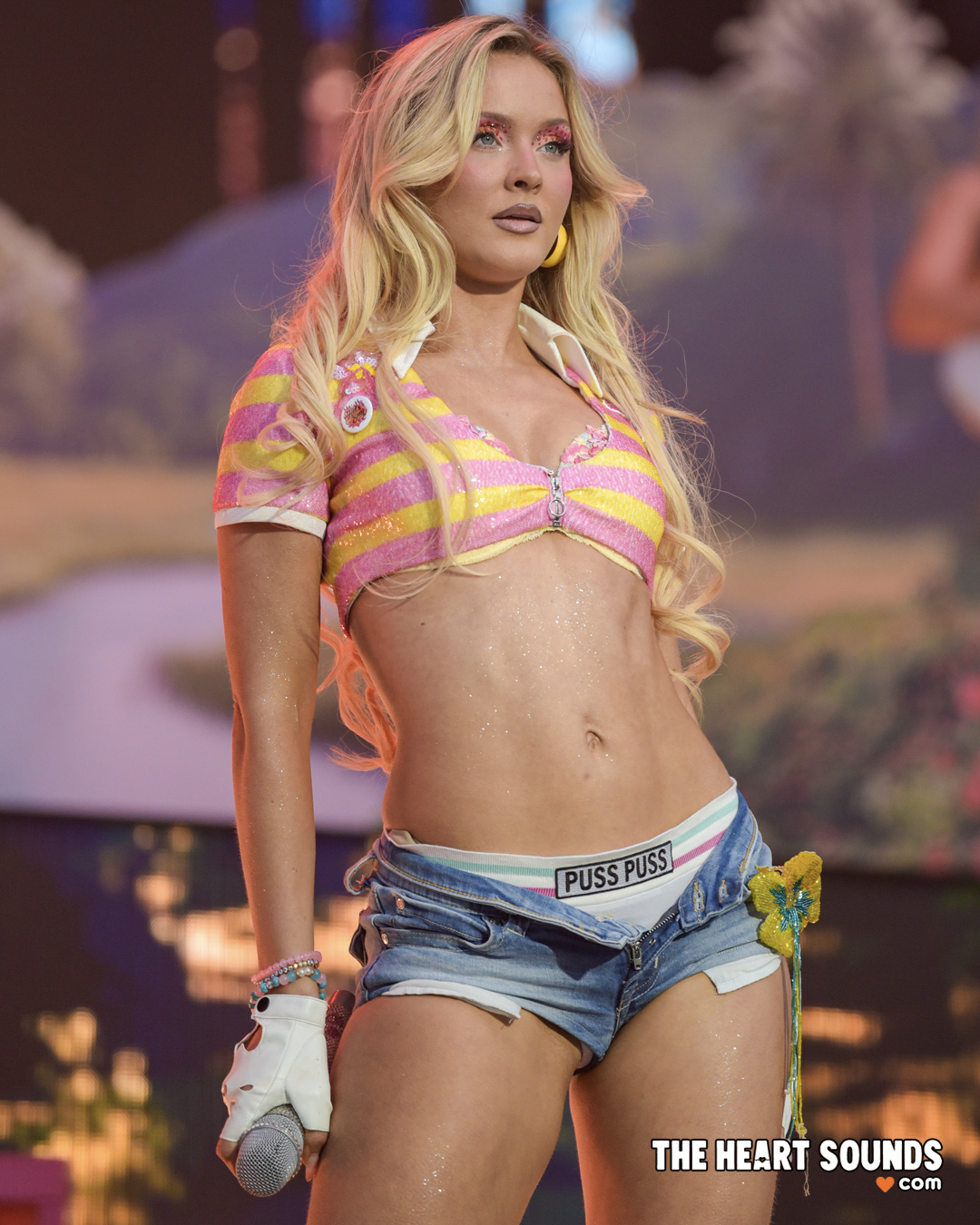
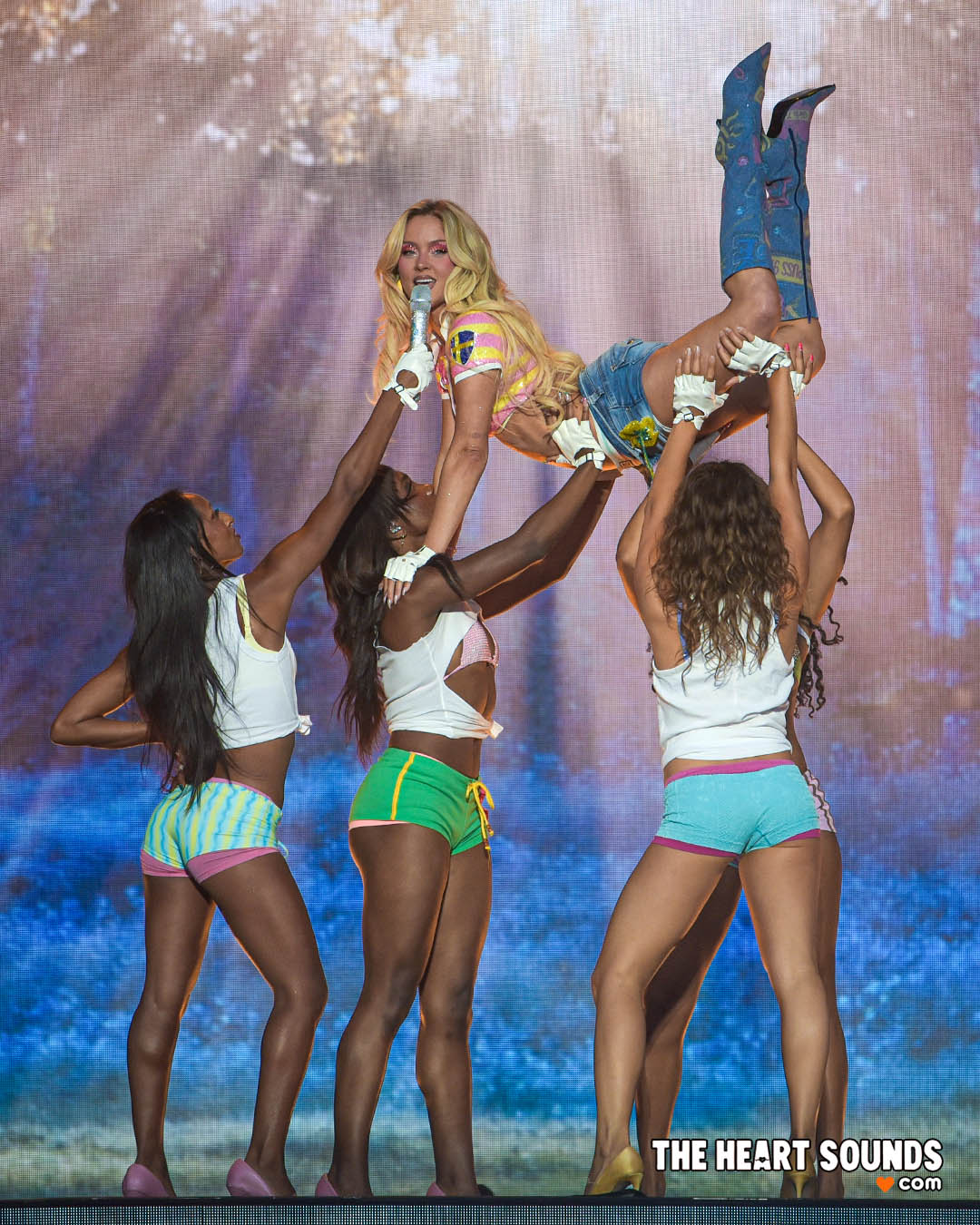
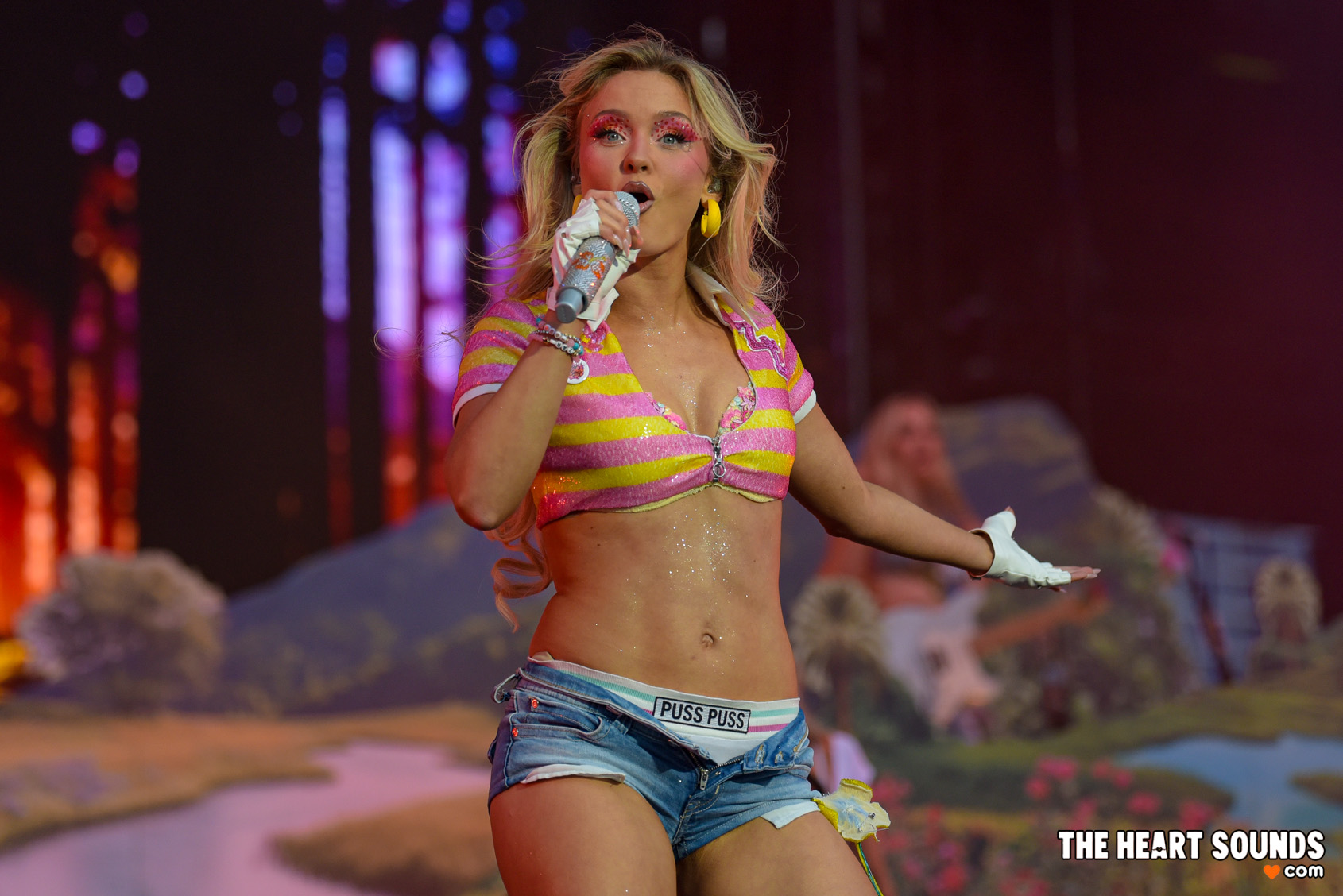
We made it just in time to reach the T-Mobile Stage, where a massive crowd (massive!) had already gathered for Zara Larsson. It didn’t take long to understand why. The Swedish singer walked onstage with confidence and immediately took control of the field, delivering a polished pop performance built around strong vocals, sharp choreography, and nonstop movement. Every part of the production felt carefully planned, but nothing came across as stiff or overrehearsed. Zara looked like she was having just as much fun as the fans watching her.
Her voice remained remarkably consistent throughout the set, even while dancing through demanding routines. Songs like “Midnight Sun,” “Can’t Tame Her,” and “She Did It Again” by Tyla kept the audience moving from the start, while longtime favorites “Lush Life,” which included a fan on stage doing the famous dance/choreography next to Zara, and “Symphony” turned into giant singalongs that echoed well beyond the front rows. People danced wherever they could find space, with groups of friends throwing their arms around each other during every familiar chorus.
Between songs, Zara paused to smile, wave, and thank the audience, creating moments that felt genuine despite the size of the crowd. The band, dancers, and lighting all complemented her performance without ever taking attention away from her vocals.
Closing the set by returning to “Midnight Sun” was a smart choice that left the audience on a high note. It was the kind of performance that reminded everyone why Zara continues to be one of pop’s strongest live performers. She combined precision, personality, and crowd interaction into a set that kept the momentum of Day Two moving forward.
NOT FOR RADIO
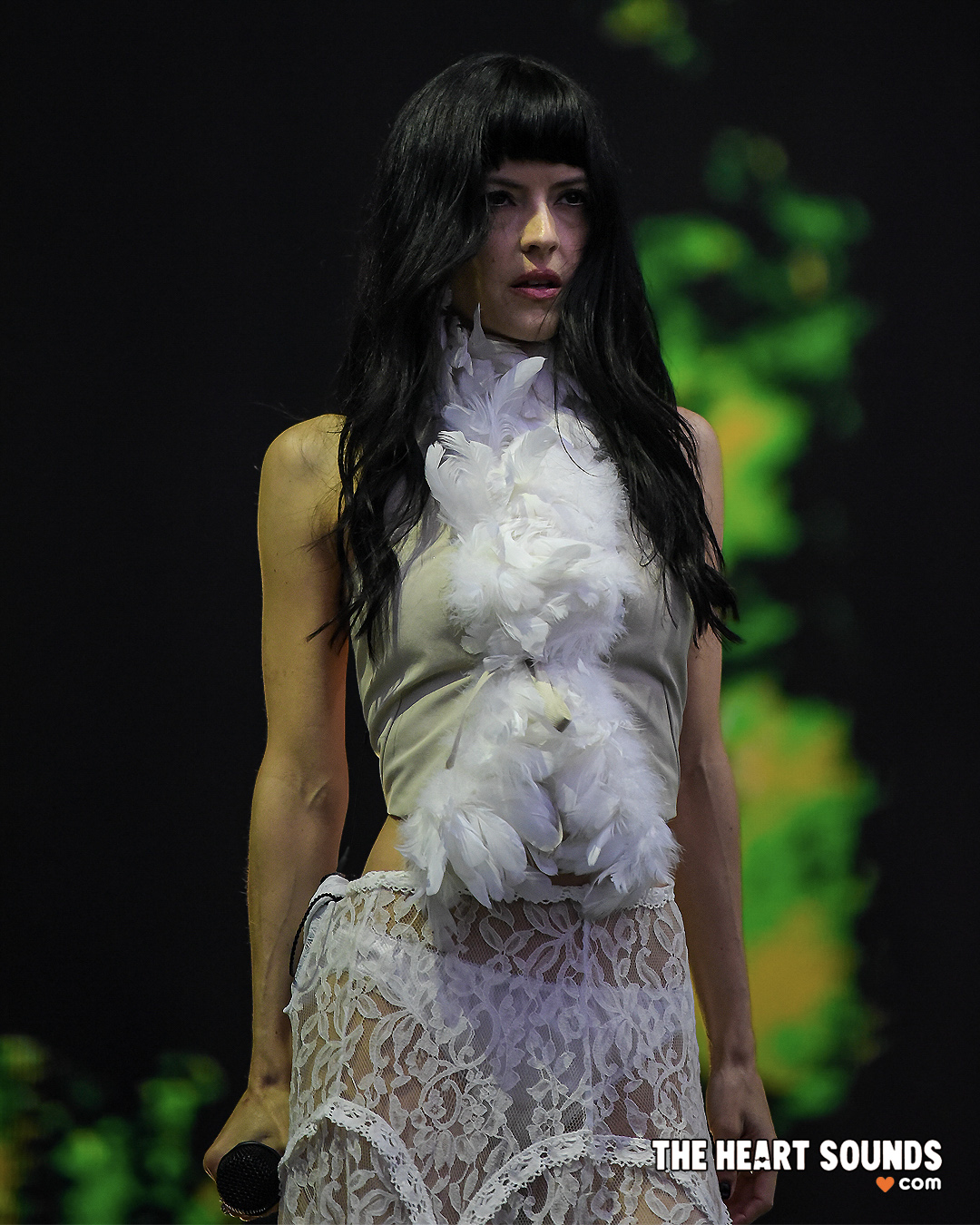
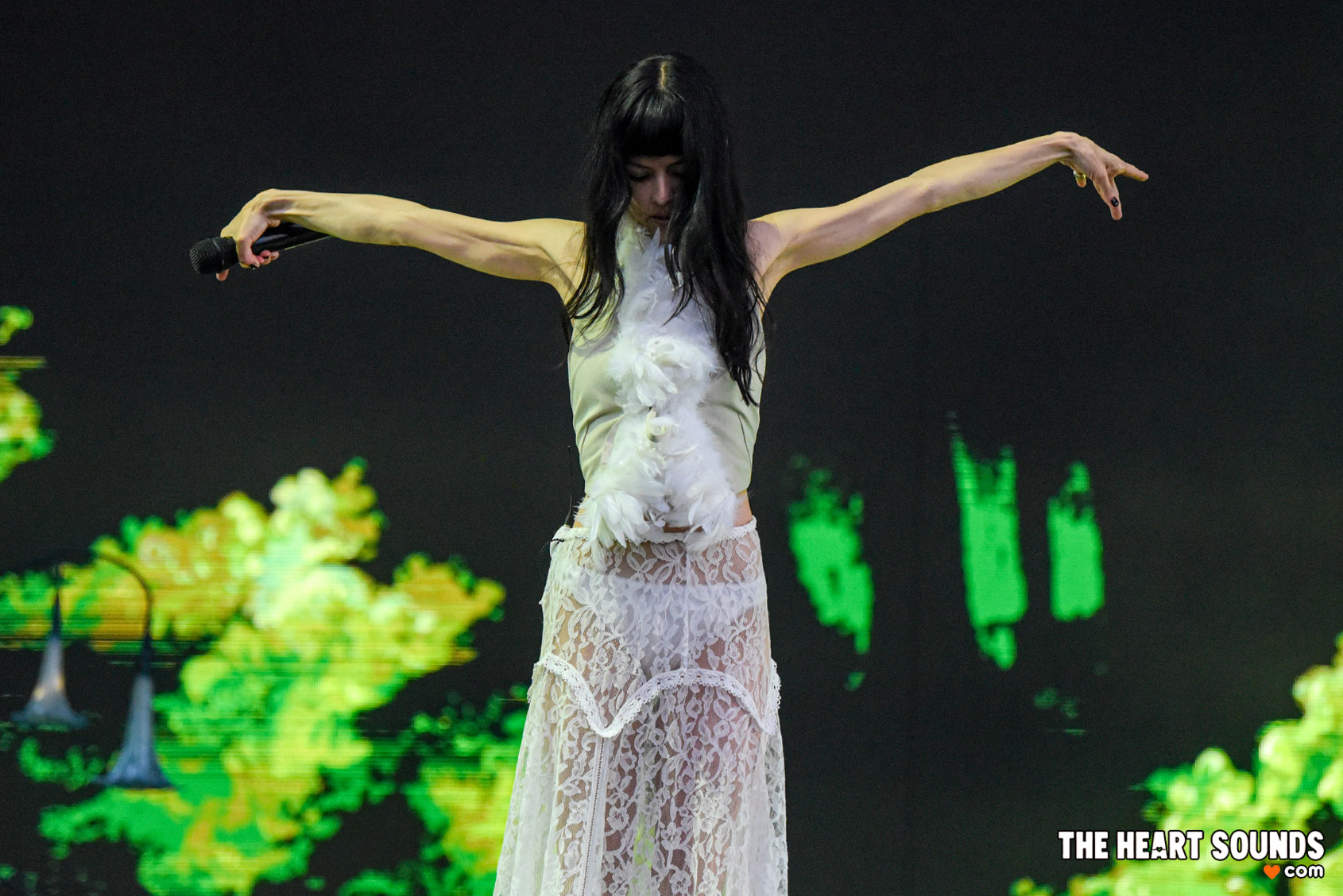
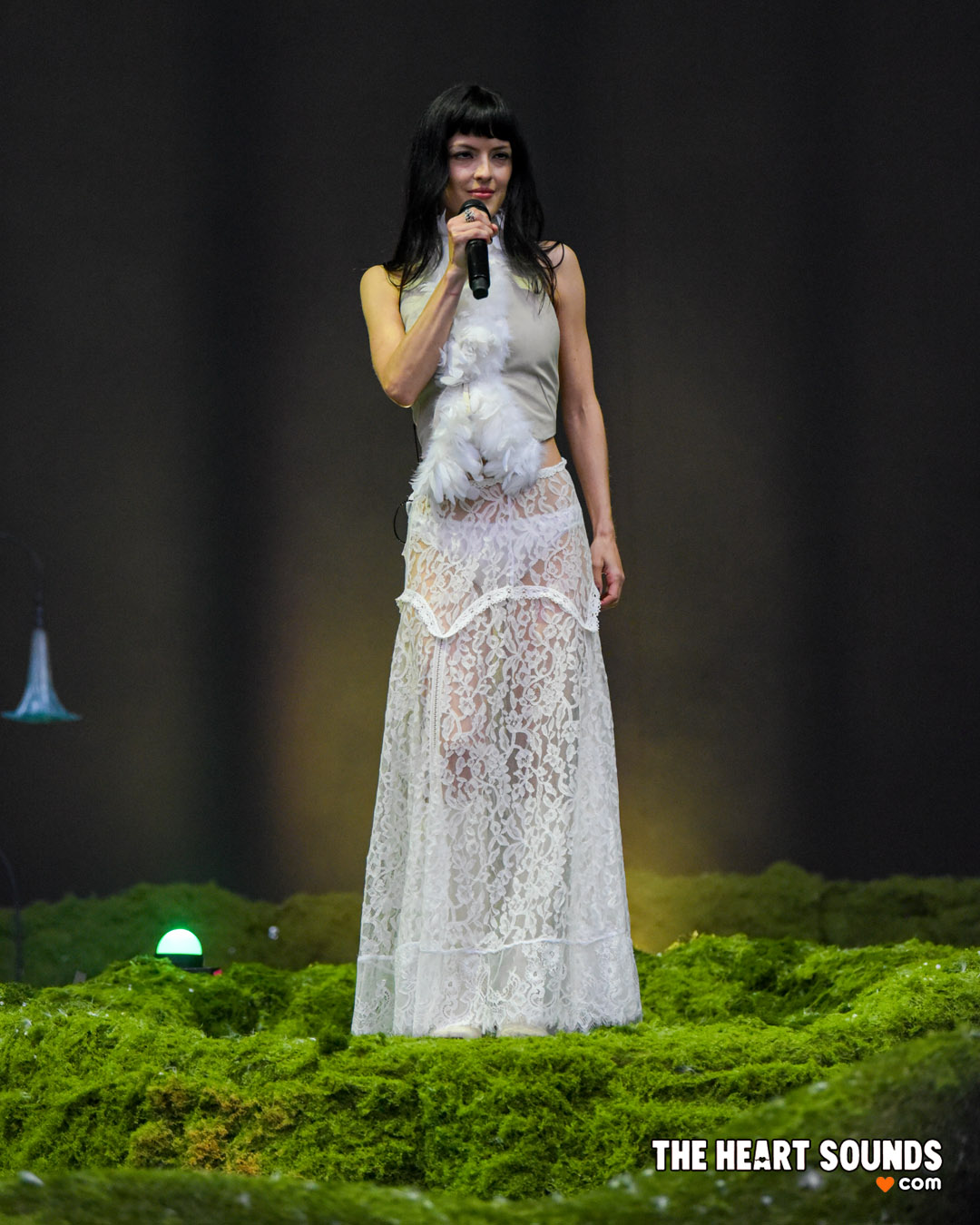
One of the most intriguing discoveries of the day came from Not For Radio, the solo project created by María Zardoya, best known as the vocalist of The Marías. Anyone expecting the dreamy indie pop that made her famous quickly realized this project follows a completely different path. Instead of familiar melodies or radio-friendly hooks, María explored darker textures and a mood that felt mysterious from beginning to end.
The performance leaned into a gothic-romantic atmosphere that immediately separated it from everything else we had seen that afternoon. Soft lighting, restrained stage movement, and haunting arrangements created an intimate setting despite the festival environment. Rather than filling every pause with conversation, María allowed silence to become part of the performance, making each song feel even more immersive.
Tracks including “Puddles,” “Moment,” “Magnet,” “Kitten,” “Comet,” “My Turn,” and the closing “Back To You” unfolded patiently, inviting the audience to simply listen. Many fans stood quietly, completely focused on the music, while others gently swayed along to the slower rhythms. It was refreshing to see a festival crowd embrace a performance that relied more on atmosphere than spectacle.
What impressed us most was María’s willingness to challenge expectations. Not For Radio isn’t trying to recreate The Marías, and that’s exactly what makes the project interesting. It feels deeply personal, experimental, and unafraid to follow its own direction. By the final notes of “Back To You,” the audience rewarded the performance with warm applause that reflected genuine appreciation.
MAJOR LAZER
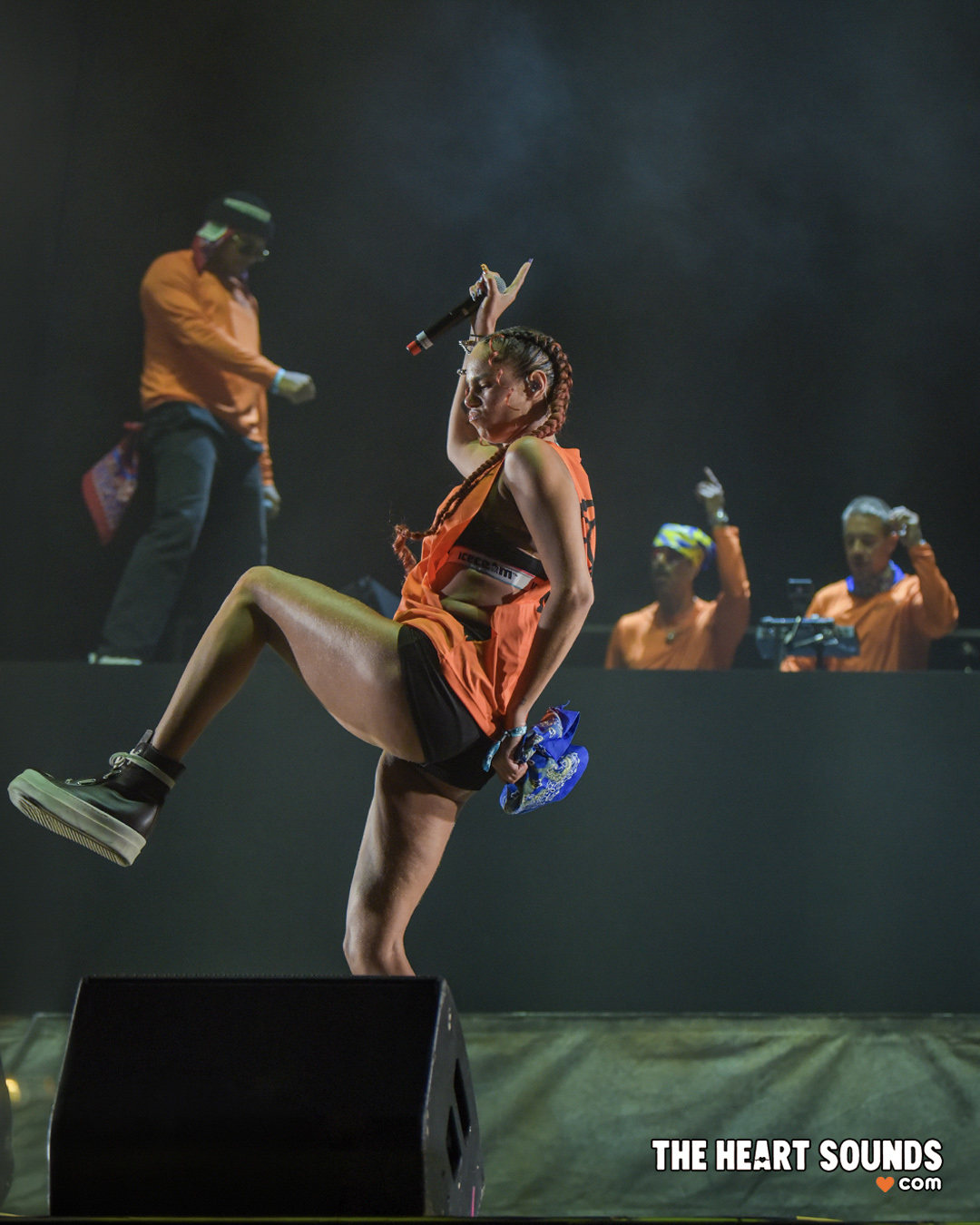
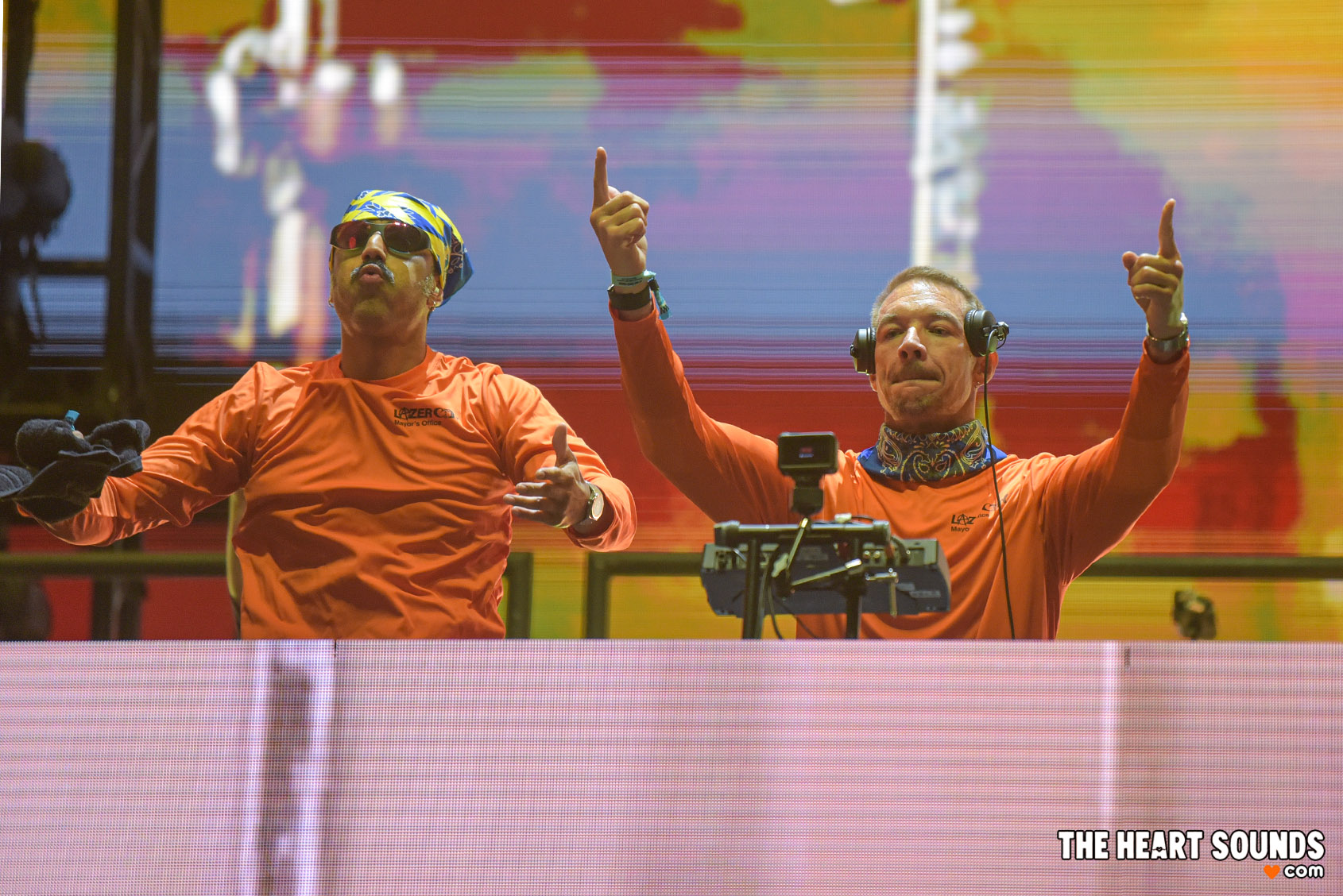
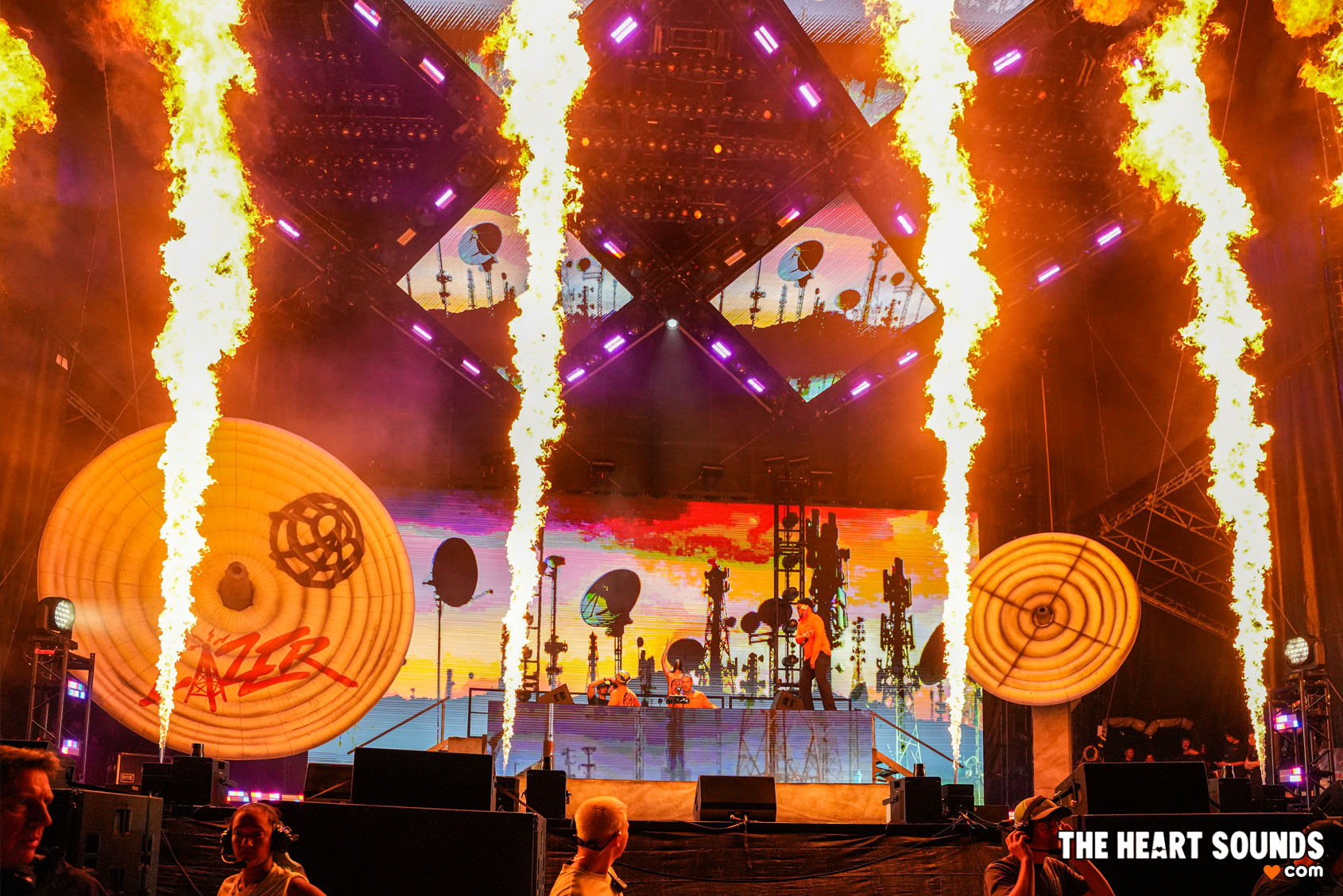
To wrap up Day Two, we wanted one last excuse to dance, and Major Lazer delivered exactly that. The moment the first beats blasted through the speakers, the crowd transformed into one giant party. Fans packed every available space, jumping before the music had even fully kicked in. By then, everyone knew they weren’t simply watching a DJ set. They were stepping into one of the most entertaining dance parties Lollapalooza had to offer.
With Diplo, Walshy Fire, Ape Drums, and vocalist America Foster leading the celebration, the pace never slowed. Massive LED visuals, bursts of pyrotechnics, booming bass, and nonstop crowd interaction kept the energy high from beginning to end. Every transition flowed naturally into the next, constantly shifting between dancehall, EDM, hip hop, and electronic music without ever feeling repetitive.
Songs like “Goat,” “Money Longer,” and “London” kept the audience moving, but the loudest reactions came during “Lean On,” “Light It Up,” “Cold Water,” and “Get Free,” when thousands of people sang every lyric while continuing to jump in unison. Even those watching from farther back couldn’t resist dancing.
By the time “Orgasmo” closed the set, the crowd looked completely exhausted in the best possible way. After a full day spent running between stages, Major Lazer provided the perfect finale. It wasn’t about intricate musicianship or emotional storytelling. It was about letting go, dancing with strangers, and ending another packed day at Grant Park with a huge smile.
By the time we made our way toward the festival exits, the conversations happening around us perfectly summed up what makes Lollapalooza so special. Some groups were still talking about finally seeing their favorite artist in person, while others were already comparing schedules for the next day. Everywhere you looked, people were sharing photos, trading favorite moments, and debating which performance stood above the rest.
Day Two highlighted one of this festival’s biggest strengths: its ability to bring completely different musical worlds together without ever feeling disconnected. Within a single afternoon, we moved from intimate indie pop and polished K-pop to pounding electronic music, heartfelt singer-songwriters, explosive rock, hyper-pop, and legendary alternative icons. Somehow, every set found its own audience while adding something unique to the day.
The weather continued to cooperate, the crowds remained enthusiastic, and every walk across Grant Park offered another surprise waiting around the corner. Whether someone came for one artist or planned their entire day from the moment the schedule was released, there was always another memorable performance just a few minutes away.
As we packed up our cameras and looked back across the festival grounds one last time, there was still a feeling that plenty more was waiting to happen. If Day Two was any indication, Lollapalooza 2026 was far from slowing down, and we were already looking forward to whatever the next day would bring.
